





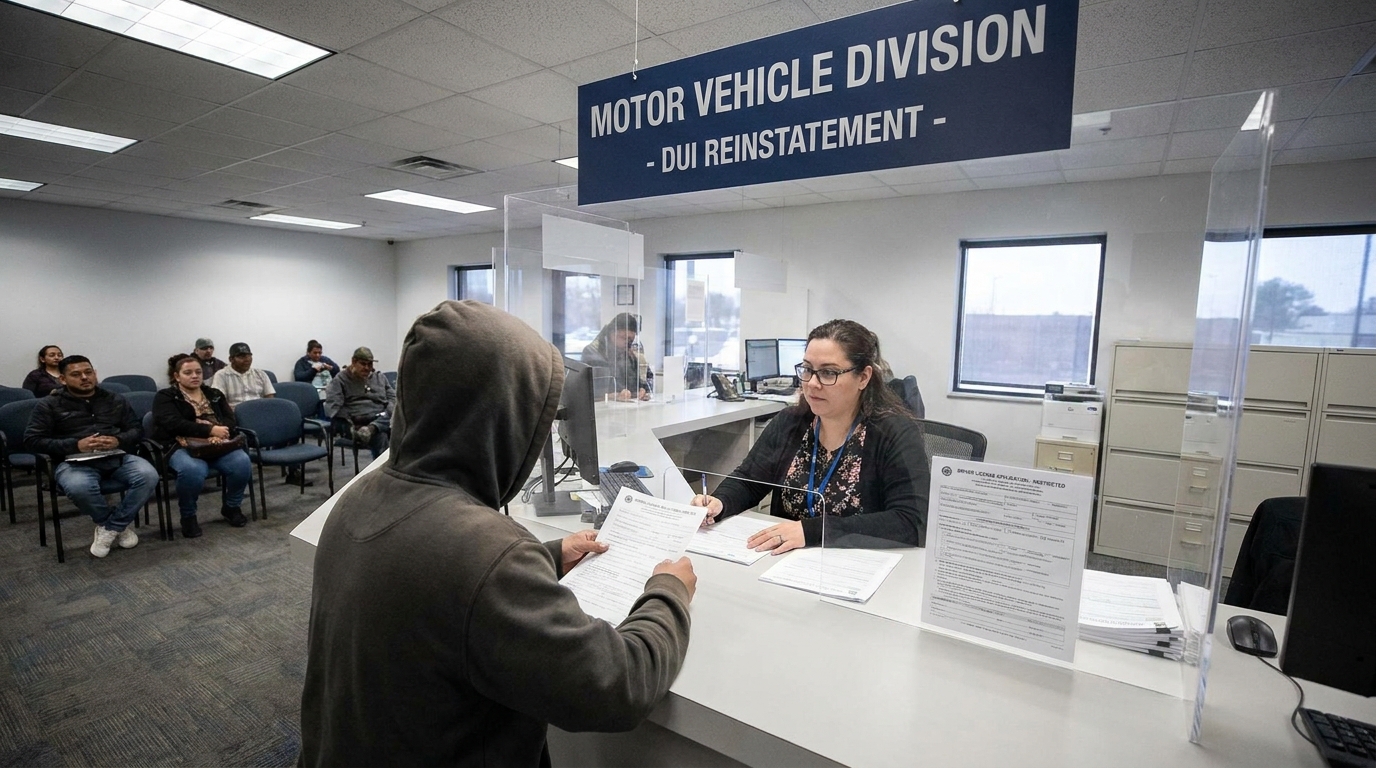
When an Arizona DUI arrest involves a qualifying blood alcohol or drug test result, MVD may begin an Admin Per Se license suspension under ARS § 28-1385. The good news is that Arizona law gives you an opportunity to challenge that suspension. The deadline is critical. Under current Arizona law, MVD must receive your hearing request within 30 days of the suspension notice date. A timely hearing request generally stays the Admin Per Se suspension while the administrative hearing is pending.
For someone who relies on a driver’s license to work, care for children, attend medical appointments, or manage everyday responsibilities, an MVD hearing can be just as important as the criminal case. This guide explains the Admin Per Se process, how to request an MVD hearing, what an administrative law judge may consider, what can happen if the suspension is upheld, and how a DUI attorney can challenge the suspension.
Table of Contents
- What Does Admin Per Se Mean After an Arizona DUI Arrest?
- The 30-Day Rule for Requesting an Arizona MVD Hearing
- What Happens After You Request an MVD DUI Hearing?
- What Does the Administrative Law Judge Decide?
- Arizona Admin Per Se Suspension Penalties and Restricted Driving Options
- Admin Per Se vs. Arizona’s Implied Consent Suspension
- Defense Strategies for an Admin Per Se Hearing
- FAQs About Arizona MVD DUI Hearings
- Important Things to Remember
- How Shah Law Firm Can Help
What Does Admin Per Se Mean After an Arizona DUI Arrest?
Admin Per Se is an administrative driver’s license process separate from the criminal DUI case. The primary statute is ARS § 28-1385, officially titled Administrative license suspension for driving under the influence or for homicide or assault involving a motor vehicle; report; hearing; summary review; ignition interlock device requirement. In plain English, the statute allows MVD to take action against a driver’s license based on certain test results associated with a DUI arrest, without waiting for a criminal conviction.
For most adult noncommercial drivers, an Admin Per Se action may arise when testing indicates a blood or breath alcohol concentration of 0.08 or more. The statute also covers an alcohol concentration of 0.04 or more in certain commercial motor vehicle and vehicle-for-hire situations. It can also apply when testing indicates certain drugs or drug metabolites, subject to the statute’s prescription provision.
The law enforcement officer normally completes an Admin Per Se or implied consent affidavit containing information about the DUI arrest, the officer’s grounds for believing the person was driving or in actual physical control, and the chemical test information. Current Arizona law requires the officer’s certified report to be forwarded to the Arizona MVD within 30 days after the arrest, subject to a statutory exception involving death or serious physical injury.
Depending on what happened during the DUI arrest, the officer may serve the suspension order directly. If the blood test results were not yet available, the officer may instead advise the driver that a report will be sent to MVD and that MVD may later mail the suspension notice. This is one reason someone arrested for DUI should watch their mail and make sure MVD has their correct address.
The Admin Per Se case does not determine whether you are guilty of a criminal DUI charge. A Phoenix DUI case, Scottsdale DUI case, Tempe DUI case, or other Arizona DUI prosecution proceeds separately through criminal court. ARS § 28-1385 specifically provides that a decision not to sustain the administrative suspension does not control a civil or criminal proceeding.
The 30-Day Rule for Requesting an Arizona MVD Hearing
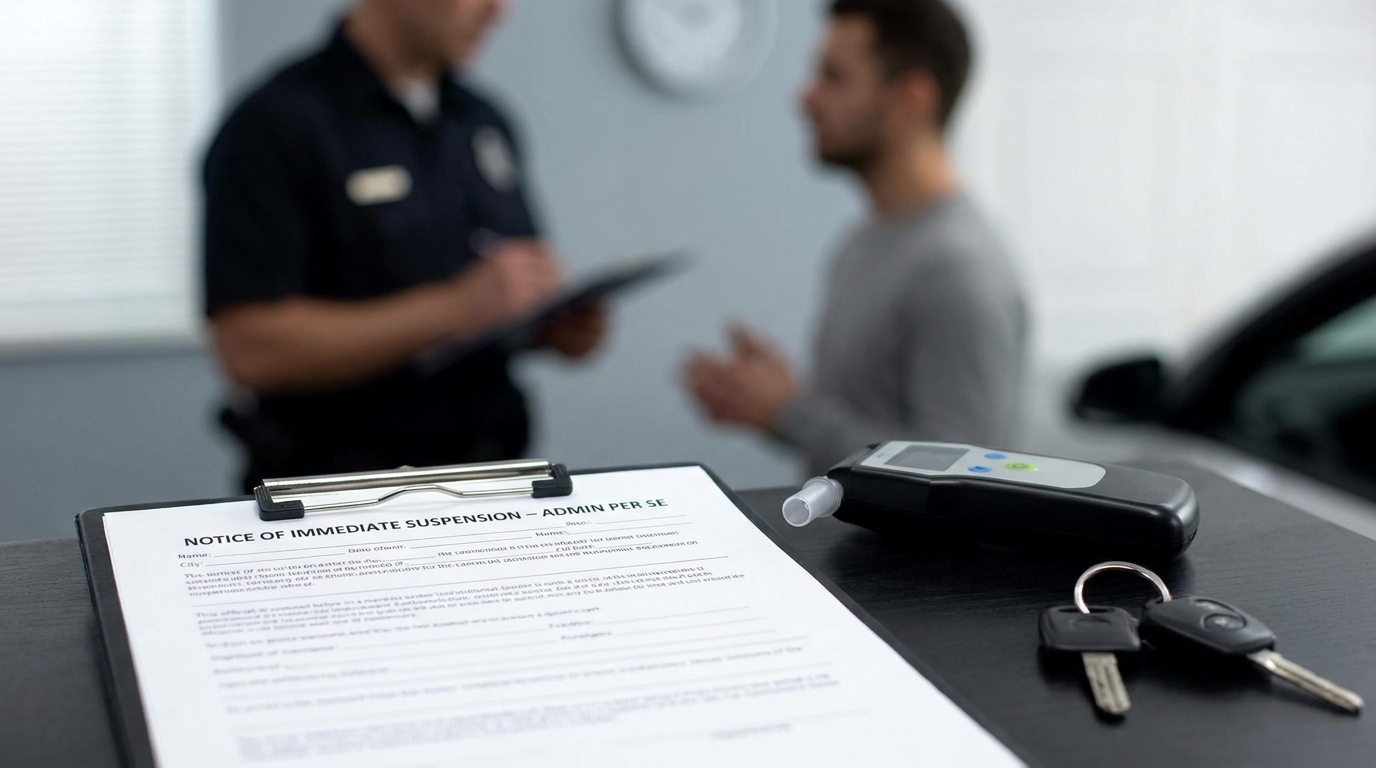
Arizona DUI law now provides a 30-day deadline for requesting an Admin Per Se hearing. Under ARS § 28-1385(G), the Arizona MVD must receive a request for a hearing or summary review within 30 days of the suspension notice date. If MVD does not receive a timely request, the suspension order becomes final.
This is worth emphasizing because some older Arizona DUI articles, forms, and online discussions still refer to a 15-day rule. ADOT’s general hearing information also states that many other types of MVD actions use a 15-day deadline. Admin Per Se DUI cases are different. ARS § 28-1385 specifically gives a driver 30 days to request a hearing or summary review, and ADOT’s current DUI page confirms the same 30-day deadline.
A hearing request must be made in writing or through an authorized online method. Arizona law expressly allows a written or online hearing request. ADOT’s Executive Hearing Office currently accepts requests through available electronic procedures and provides filing options by email, mail, fax, and in person. The safest approach is to follow the instructions on the suspension notice and keep proof that you submitted and received the hearing request.
ADOT states that a hearing request should generally identify the driver, provide contact information, include the Arizona driver license number when available, and identify the departmental action being challenged. The Executive Hearing Office warns that it may deny an untimely hearing request.
A DUI defense attorney can submit the MVD hearing request on behalf of a client and begin reviewing the administrative case as soon as the criminal defense investigation starts. That matters because waiting until close to the deadline can reduce the time available to obtain reports, evaluate testing records, identify witnesses, and prepare challenges to the suspension.
What Happens After You Request an MVD DUI Hearing?
One of the most valuable consequences of a timely hearing request is the stay of the Admin Per Se suspension. ARS § 28-1385(L) states that a timely hearing request stays the suspension until the hearing is held. MVD may issue temporary driving authority while the case is pending, although the department does not return a surrendered physical license simply because a hearing was requested.
For many drivers, this means they can continue exercising their authorized driving privilege while the administrative case is pending rather than automatically beginning the suspension on the date originally listed in the Admin Per Se form. Confirm the exact status of a driver’s license through MVD, especially if other suspensions, revocations, warrants, insurance issues, or prior DUI actions affect the license.
The ADOT Executive Hearing Office, not the criminal court handling the DUI charge, handles the hearing. Administrative law judges at the Executive Hearing Office are Arizona-licensed attorneys. ADOT states that hearings may occur in person, by video conference, or by telephone, depending on the notice issued in the case. Testimony is taken under oath, the proceeding is recorded, witnesses may be questioned and cross-examined, and reliable hearsay may be considered.
The administrative law judge may issue a decision during the hearing or take the matter under advisement. ADOT states that it typically issues a written Decision and Order within about two weeks after the hearing. Depending on the type of ruling, you may also have rights to rehearing or judicial review.
Example 1: A Mesa driver is arrested for DUI after a traffic stop and submits to a breath test that reports a BAC above 0.08. The officer serves an Admin Per Se form. The driver sends a valid MVD hearing request within the 30-day period. The administrative suspension is stayed while the hearing is pending. The criminal DUI case continues separately in Mesa Municipal Court.
Example 2: A Chandler driver submits to a blood draw after a DUI arrest. The blood alcohol result is not available that night, so the driver does not receive an immediate Admin Per Se suspension. MVD later mails a notice based on the reported test result. The 30-day hearing period is tied to the date of that suspension notice, making it especially important that MVD has the driver’s current mailing address.
What Does the Administrative Law Judge Decide?
An Admin Per Se hearing is not a complete trial of the criminal DUI case. ARS § 28-1385(M) limits the administrative hearing to five specific issues. A DUI attorney preparing for the hearing should focus the evidence, testimony, cross-examination, and legal arguments on those statutory questions.
One issue is whether the law enforcement officer had reasonable grounds to believe that the person was driving or in actual physical control of a motor vehicle while under the influence of alcohol or drugs. This may involve facts surrounding the traffic stop, accident investigation, observations of the driver, witness statements, or evidence about who was actually operating the motor vehicle.
Another issue is whether the person was arrested for a qualifying offense. The administrative law judge may also consider whether a chemical test was taken and whether the reported result met the statutory threshold. For many noncommercial alcohol cases, the relevant Admin Per Se threshold is 0.08 or more.
The remaining statutory issues concern the chemical testing itself. The judge may decide whether the testing method was valid and reliable and whether the test results were accurately evaluated. These issues can create substantial areas for a DUI defense challenge when questions involve blood analysis, breath-testing procedures, equipment records, laboratory documentation, sample handling, or the interpretation of test data.
Because the hearing is limited to these statutory subjects, an argument that may matter greatly in criminal court may not necessarily decide the MVD case. An experienced DUI attorney can separate issues that belong in criminal court from those that can directly challenge the administrative license suspension.
Arizona Admin Per Se Suspension Penalties and Restricted Driving Options
Under ARS § 28-1385(H), an Admin Per Se suspension is generally at least 90 consecutive days. Arizona law, however, provides qualifying drivers with restricted driving options that can reduce the period without driving privileges.
Under ARS § 28-1385(I), a qualifying driver may serve at least 30 consecutive days of suspension followed by at least 60 consecutive days of restricted driving. Among other requirements, the person must not have caused death or serious physical injury during the incident, must satisfy the statute’s prior-offense requirement, and must provide satisfactory evidence of completing the required alcohol or drug screening.
Arizona law also allows some drivers to request a Special Ignition Interlock Restricted Driver License, commonly called a SIIRDL. Under ARS §§ 28-1385 and 28-1401, a qualifying person may receive a restricted driver license conditioned on use of a certified ignition interlock device. A critical point is that a person who accepts certain SIIRDL relief agrees to the administrative action and waives the right to contest that action through an administrative hearing.
ADOT advises drivers that if they request a hearing, they are not eligible for a SIIRDL while that hearing is pending, although a qualifying driver may seek one afterward. The choice between challenging the suspension and immediately pursuing restricted driving can have significant practical consequences, so make the decision with the specific facts and license status in mind.
The administrative suspension should also be viewed separately from any driver’s license sanctions that may later arise from a DUI conviction in criminal court. A person could defeat the Admin Per Se action yet still face licensing consequences if later convicted. Similarly, the outcome of an MVD administrative hearing does not automatically determine the criminal charges.
Admin Per Se vs. Arizona’s Implied Consent Suspension
Admin Per Se and implied consent are often discussed together because both can arise from an Arizona DUI arrest, but they address different circumstances. Mixing them up can cause a driver to misunderstand the suspension period, the hearing issues, and the available restricted license options.
ARS § 28-1321 is Arizona’s implied consent statute. Its official title is Implied consent; tests; refusal to submit to test; order of suspension; hearing; review; temporary permit; notification of suspension; special ignition interlock restricted driver license. In plain English, operating a motor vehicle in Arizona carries statutory consent to qualifying chemical testing after a DUI arrest when the legal requirements are met. Refusing the required test can result in a separate administrative suspension.
For a refusal without another refusal in the applicable 84-month period, the suspension is generally 12 months. A second or subsequent refusal within 84 months can result in a two-year suspension. Hearings in a refusal case also differ. Under ARS § 28-1321(K), the administrative law judge considers reasonable grounds, whether the person was arrested, whether the person refused the test, and whether the person was informed of the consequences of refusing.
By comparison, an Admin Per Se case under ARS § 28-1385 normally involves a person who submitted to testing, followed by a qualifying reported alcohol or drug result. The hearing then includes issues concerning the test threshold, validity and reliability of the testing method, and accurate evaluation of the test results.
Both types of MVD cases are separate from the criminal DUI case. A DUI attorney reviewing an arrest should identify exactly which administrative action MVD is taking rather than assuming every DUI license suspension is governed by the same rules.
Defense Strategies for an Admin Per Se Hearing
No single defense applies to every MVD hearing. The strongest strategy depends on the police reports, Admin Per Se affidavit, body camera footage, test records, laboratory documents, witness testimony, and facts surrounding the DUI arrest. Attorney Arja Shah can review both the administrative case and the related criminal defense case to identify issues that may affect the driver’s license.
Challenge Reasonable Grounds
ARS § 28-1385 requires the administrative law judge to decide whether the officer had reasonable grounds to believe the driver was operating or in actual physical control of a motor vehicle while under the influence.
A defense attorney may question what the officer actually observed before the arrest. For example, was the officer relying on personal observations, statements from another person, an accident investigation, or assumptions about who had been driving? Evidence concerning the driver’s location, vehicle condition, keys, engine, witness statements, or timing may become important.
Challenge Whether the Driver Was Properly Placed Under Arrest
The statute separately asks whether the person was placed under arrest for a qualifying violation. Police reports, body camera footage, dispatch records, and officer testimony may be reviewed to determine whether the statutory arrest requirement was satisfied.
This does not mean every issue with an arrest automatically defeats an Admin Per Se suspension. The question is narrower. The attorney should tie the evidence directly to the statutory issue the administrative law judge has authority to decide.
Challenge Whether the Test Met the Statutory Threshold
The administrative per se hearing also addresses whether the test produced a result covered by ARS § 28-1385. In a standard adult noncommercial alcohol case, that commonly means a blood or breath alcohol concentration of 0.08 or higher when the test was administered.
Carefully examine laboratory reports and instrument records. A reported result that does not fall within the statute, belongs to another person, contains clerical errors, or is otherwise unsupported may provide grounds to challenge the suspension.
Challenge the Validity and Reliability of the Testing Method
ARS § 28-1385 specifically places the validity and reliability of the testing method within the hearing’s scope. This can make testing records highly significant.
Depending on the test involved, a DUI defense lawyer may examine calibration records, maintenance information, quality-control documentation, laboratory procedures, sample collection methods, storage conditions, chain-of-custody records, analytical data, and other evidence bearing on whether the testing method was reliable in that case.
Challenge Whether the Test Results Were Accurately Evaluated
Even when a testing method is generally accepted, the statute separately requires consideration of whether the test results were accurately evaluated. A lawyer may review laboratory paperwork, chromatograms or analytical records when applicable, instrument data, calculations, technician documentation, or other records used to produce the reported result.
This distinction matters. The question is not simply whether blood or breath testing can be reliable. The hearing may address whether the particular test used in the driver’s case was properly performed and accurately interpreted.
Review the Admin Per Se Affidavit and Filing Requirements
ARS § 28-1385 requires the law enforcement officer to provide a certified report containing specified information. Current law generally requires that report to be forwarded to MVD within 30 days after the arrest, with a statutory exception when the incident resulted in death or serious physical injury.
An attorney can compare the affidavit, police reports, chemical test documentation, arrest date, and MVD records for inconsistencies or statutory problems. Not every paperwork mistake will void a suspension, but you should examine the administrative record rather than assume it is correct.
Cross-Examine the Law Enforcement Officer and Other Witnesses
An MVD hearing is an evidentiary proceeding. Witnesses may testify under oath and may be cross-examined. A DUI defense attorney can question the officer about the claimed basis for the DUI arrest, operation or actual physical control, chemical testing, documentation, and other issues falling within the hearing’s statutory scope.
Cross-examination can also reveal differences between written reports and testimony. Those differences may matter at the administrative hearing and may also provide useful information when preparing the related criminal DUI defense.
Use the MVD Hearing as Part of the Broader DUI Defense
The MVD hearing and criminal court case are legally separate, but the same incident creates both proceedings. Testimony from an officer at the administrative hearing may help a criminal defense attorney evaluate evidence that will later appear in court.
Arja Shah may use the MVD process to examine the officer’s account, identify weaknesses in BAC or chemical-testing evidence, review actual physical-control issues, and develop a defense strategy for the DUI charge. Winning the MVD hearing does not dismiss the criminal charges, but the information developed during the hearing can still be valuable.
FAQs About Arizona MVD DUI Hearings
How long do I have to request an Admin Per Se hearing in Arizona?
You have 30 days after the date of the suspension notice for MVD to receive your hearing or summary review request under ARS § 28-1385. This is different from the 15-day deadline that applies to some other MVD actions. ADOT’s current DUI guidance also confirms the 30-day period.
Can I keep driving after I request the MVD hearing?
A timely Admin Per Se hearing request stays the administrative suspension while the hearing is pending. MVD may issue temporary driving authority through the administrative process. You should still verify your current license status because another suspension, revocation, restriction, or unrelated MVD action could affect your ability to drive legally.
What happens if I miss the 30-day deadline?
ARS § 28-1385 states that if MVD does not receive the hearing or summary review request within 30 days after the notice date, the suspension order becomes final. ADOT also warns that missing the applicable DUI hearing deadline means you cannot challenge the suspension through the ordinary hearing process.
Is my MVD hearing the same as my criminal DUI court date?
No. The MVD hearing is an administrative proceeding involving your driving privilege. The DUI case is a criminal prosecution that can involve jail, fines, probation, ignition interlock requirements, and other criminal consequences. A result in one proceeding does not automatically decide the other.
What happens if the police officer does not appear at my MVD hearing?
The answer depends on the hearing circumstances, the evidence admitted, applicable administrative rules, whether the officer was properly subpoenaed or required to appear, and what evidence MVD can otherwise consider. A driver’s suspension is not automatically dismissed in every case simply because an officer is absent. Reliable hearsay may be admitted in Executive Hearing Office proceedings, making preparation important.
Can I get a restricted license if the Admin Per Se suspension is upheld?
Many qualifying drivers can serve at least 30 consecutive days of suspension followed by at least 60 days of restricted driving under ARS § 28-1385(I). Other drivers may qualify for a SIIRDL that allows restricted driving with a certified ignition interlock device. Eligibility depends on the statutory requirements and the driver’s record.
Can I request a SIIRDL and still fight the suspension at a hearing?
This requires caution. ARS § 28-1385 provides that when MVD issues certain special ignition interlock restricted driver licenses, the driver agrees to the administrative action and waives the right to an administrative hearing challenging it. ADOT also states that a person who requests a hearing is not eligible for a SIIRDL while that hearing is pending, although the person may qualify afterward.
What happens if I win my Admin Per Se hearing?
If the administrative suspension is not sustained, the Admin Per Se action at issue in that hearing does not go into effect. That does not dismiss the criminal DUI charge. ARS § 28-1385 expressly provides that the administrative ruling does not control a separate civil or criminal court proceeding.
Can I appeal if MVD upholds the suspension?
Administrative decisions may carry rehearing or judicial review rights. ADOT states that its written Decision and Order identifies available review rights. Arizona law also provides judicial review procedures for qualifying MVD license decisions. Because deadlines can apply after the decision is issued, review the order promptly.
Important Things to Remember
- An Arizona DUI arrest may create both a criminal case and a separate MVD administrative license case.
- The current deadline to request an Admin Per Se hearing under ARS § 28-1385 is 30 days after the suspension notice, not 15 days.
- A timely hearing request generally stays the Admin Per Se suspension until the hearing is decided.
- The administrative law judge is limited to the specific issues listed in ARS § 28-1385.
- Those issues include reasonable grounds, the arrest, qualifying test results, the reliability of the testing method, and an accurate evaluation of the results.
- An Admin Per Se suspension is generally at least 90 days, although qualifying drivers may receive restricted driving privileges.
- A SIIRDL may be available in qualifying alcohol-related cases, but accepting one can waive administrative hearing rights.
- An implied consent refusal suspension under ARS § 28-1321 is different from an Admin Per Se suspension under ARS § 28-1385.
- A refusal can lead to a 12-month suspension or a two-year suspension for a qualifying repeat refusal.
- Winning an MVD hearing does not automatically dismiss the criminal DUI charge.
- Losing the MVD hearing does not necessarily mean the driver will be convicted of DUI in criminal court.
- A DUI attorney can prepare for the administrative hearing while also defending the related criminal charges.
How Shah Law Firm Can Help

The period immediately after a DUI arrest can move quickly. A driver may be dealing with an Admin Per Se form, an upcoming criminal court appearance, concerns about a license suspension, employment issues, and questions about whether restricted driving will be available. Missing the MVD hearing deadline can eliminate an opportunity to challenge the administrative suspension.
Attorney Arja Shah has devoted almost 20 years of law practice to criminal defense and DUI representation in Arizona. Shah Law Firm’s website reports more than 3,500 successful case victories, including DUI matters involving complicated evidence and licensing consequences. Arja’s experience with Arizona prosecutors, law enforcement procedures, plea negotiations, and trial practice can help clients evaluate both the MVD administrative case and the criminal charges arising from the DUI arrest.
When handling an Arizona DUI case, Arja Shah can review the Admin Per Se form, police reports, body camera evidence, BAC testing, blood or breath records, actual physical control issues, and the statutory grounds for challenging the license suspension. She can also request and prepare for the MVD hearing, cross-examine witnesses when appropriate, and address the related criminal defense case in Phoenix, Scottsdale, Tempe, Mesa, Chandler, Glendale, and surrounding Arizona communities.
Shah Law Firm offers free, one-on-one lawyer consultations for people facing DUI and criminal charges. For immediate help with an MVD hearing, Admin Per Se suspension, or Arizona DUI charge, call (602) 560-7408 or use the Shah Law Firm contact form.

