





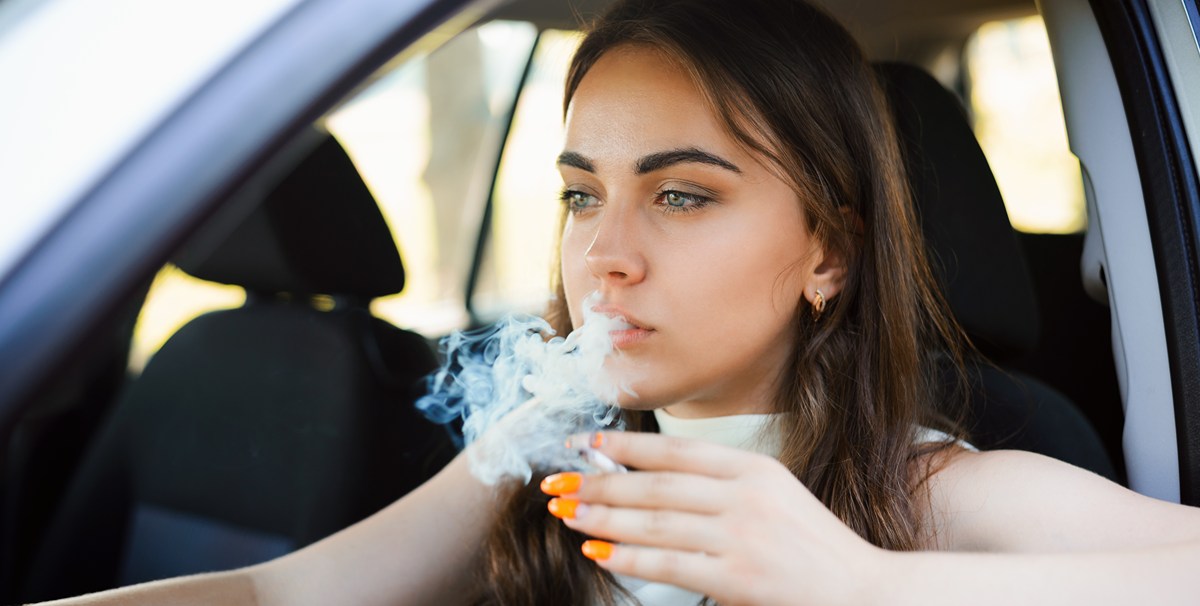
A late-night traffic stop near Mill Avenue in Tempe can turn from routine to life-changing in seconds. Many ASU students and drivers in Maricopa County do not realize that even though marijuana is legal for recreational and medical use in Arizona, driving under the influence of marijuana is still a criminal offense under state law. What surprises most people is that you can be charged with a DUI even without a measurable “legal limit” of THC in your system.
Arizona police and prosecutors treat marijuana DUIs seriously. Law enforcement officers receive special training to recognize marijuana impairment, and even minor signs of intoxication can lead to arrest. The challenge is that marijuana affects each person differently, and no simple test—like a breathalyzer—can instantly prove whether a driver was impaired.
This article explains exactly how Arizona police check for DUI when a driver is suspected of being under the influence of marijuana, what evidence officers collect, what penalties first-time offenders face, and how an experienced DUI defense attorney like Arja Shah can fight these charges.
- What Arizona Law Says About Marijuana DUI (ARS § 28-1381)
- How Police Detect Marijuana Impairment During a DUI Stop
- The Role of Drug Recognition Experts (DREs) in Marijuana DUI Investigations
- THC Blood Tests and Marijuana Metabolites Explained
- Medical Marijuana Users and DUI Charges in Arizona
- Common Signs Police Look for to Prove Marijuana Impairment
- Penalties for a First-Time Marijuana DUI in Arizona
- Defenses Used by Arizona DUI Lawyers to Challenge Marijuana DUI Cases
- FAQs About Marijuana DUI Charges in Arizona
- Important Things to Remember
- How Shah Law Firm Can Help Defend a Marijuana DUI Case
What Arizona Law Says About Marijuana DUI (ARS § 28-1381)
ARS § 28-1381(A)(1) outlines the laws in Arizona regarding DUI offenses. A person can be charged with a DUI if they are “impaired to the slightest degree” while driving or in actual physical control of a vehicle.
This applies not only to alcohol but also to cannabis and other drugs. Arizona’s DUI laws focus on impairment, not simply the presence of a substance.
Additionally, ARS § 28-1381(A)(3) makes it illegal to drive if any drug or its metabolite is found in your body, including THC or marijuana metabolites.
However, after the Arizona Supreme Court’s decision in State v. Harris (2014), the law distinguishes between active marijuana metabolites, which can cause impairment, and inactive ones, which cannot. This means that prosecutors must prove the presence of active THC that could affect your ability to drive.
In short, you can get a DUI in Arizona for marijuana only if the prosecutor can show you were impaired by marijuana or had active metabolites in your system that impacted your ability to drive safely.
How Police Detect Marijuana Impairment During a DUI Stop
When Arizona police stop a driver suspected of impaired driving, they may conduct a drug test.
Driving under the influence of marijuana, they start gathering evidence of impairment. It is crucial to address these issues right away to avoid a marijuana DUI charge.
Officers from the Tempe Police Department, Scottsdale Police, Mesa Police, and the Arizona Department of Public Safety use several observation-based methods.
- Initial Traffic Stop – The officer notes driving behavior such as weaving, slow reaction times, or failure to maintain lane position.
- Observation of Physical Cues – During the stop, officers look for the smell of marijuana, red or watery eyes, delayed responses, or the driver’s admission of recent marijuana use.
- Field Sobriety Tests (FSTs) – Officers may conduct field sobriety tests, which may include the walk-and-turn, one-leg stand, and horizontal gaze nystagmus (eye test). These are designed to detect physical and mental impairment.
- Search and Arrest – If the officer believes the person is impaired to the slightest degree, they may arrest the driver and request a blood test or call a Drug Recognition Expert (DRE) for further evaluation.
Real-world example: A 22-year-old ASU student is stopped in Tempe for speeding. The officer smells marijuana and notices slow speech and glassy eyes. Even though the student claims to have used cannabis hours earlier, the officer conducts a field sobriety test and later requests a blood sample. The results show active THC, leading to a marijuana DUI charge.
The Role of Drug Recognition Experts (DREs) in Marijuana DUI Investigations
Arizona police often rely on Drug Recognition Experts (DREs). During suspected DUI stops, police frequently look for signs of alcohol concentration and drug influence.
DREs are specially trained officers certified by the Arizona Governor’s Office of Highway Safety to recognize drug-related impairment when alcohol tests are negative or inconclusive.
A DRE conducts a 12-step evaluation, including:
- Measuring pulse, blood pressure, and pupil size
- Checking muscle tone and reaction to light
- Reviewing medical history and statements
- Conducting psychophysical tests
- Requesting a blood test to detect THC levels
These evaluations can be highly subjective. For example, fatigue, anxiety, or prescription medications can mimic signs of marijuana impairment, leading to wrongful arrests.
Defense attorneys frequently challenge DRE reports, arguing that they lack scientific reliability and rely too heavily on officer opinion.
THC Blood Tests and Marijuana Metabolites Explained
Unlike alcohol, marijuana does not have a defined legal limit. There is no Arizona law stating that a certain number of active marijuana metabolites is acceptable for avoiding a marijuana DUI. Nanograms per milliliter of THC equals impairment. Instead, prosecutors rely on lab results showing the presence of active THC metabolites in a blood test.
Common facts about THC testing:
- THC levels can vary widely depending on how the cannabis was consumed (smoking, vaping, edibles).
- Even five nanograms per milliliter of THC does not automatically prove intoxication.
- Marijuana metabolites can remain in the body for days or even weeks after consumption, especially in regular users.
- Arizona courts require proof that the driver was impaired to the slightest degree at the time of driving, not just that they had THC in their system.
According to the Arizona Office of Highway Safety, officers are encouraged to request blood samples in marijuana DUI cases rather than rely on breath tests, which cannot detect cannabis.
Medical Marijuana Users and DUI Charges in Arizona
Many Arizona residents legally use medical marijuana under the Arizona Medical Marijuana Act (AMMA), which provides guidelines for patients but does not protect against getting behind the wheel while impaired. However, medical authorization does not protect a driver from being charged with a DUI if they are impaired while driving.
The Arizona Supreme Court, in Dobson v. McClennen (2015), ruled that while medical marijuana users cannot be convicted solely for having marijuana in their system, they can still face charges if prosecutors prove the person was actually impaired at the time of driving.
That means even patients with valid medical cards must be cautious.
Having active marijuana metabolites in the bloodstream can still lead to a DUI case, especially if the law enforcement officer observes any evidence of impaired driving behavior.
Common Signs Police Look for to Prove Marijuana Impairment
Arizona police officers are trained to look for specific behavioral and physical indicators of marijuana impairment. These observations often serve as central evidence in court to establish impairment.
Common signs include:
- Slowed reaction time and poor coordination
- Dilated pupils or bloodshot eyes
- Drowsiness or confusion
- The odor of marijuana inside the car
- Delayed responses to officer questions
- Difficulty following field sobriety instructions
In cities like Mesa and Scottsdale, officers also rely on dash camera or body camera footage to document driver behavior. This video evidence can help or hurt a defense, depending on what it shows.
A skilled Arizona DUI defense attorney can help you navigate the complexities of the law. A DUI defense lawyer like Arja Shah can review all the evidence of marijuana impairment, which can lead to being found guilty of a DUI in Arizona, to challenge then how police interpreted your behavior.
Penalties for a First-Time Marijuana DUI in Arizona
A first-time marijuana DUI is usually charged as a Class 1 misdemeanor. Even though it’s a first offense, the consequences can be severe and include jail time, fines, license suspension, and mandatory drug education classes.
Arizona Marijuana DUI Penalties Table
| Penalty Type | Description (ARS § 28-1381) |
| Classification | Class 1 Misdemeanor |
| Jail Time | 10 days minimum (9 may be suspended upon completing drug treatment) |
| License Suspension | 90 days (30 days no driving, 60 days restricted) |
| Fines and Surcharges | Up to $2,500 including assessments and court fees |
| Ignition Interlock Device | Required if alcohol or other intoxicants were also involved |
| Other Penalties | Drug screening, probation, and community service |
Even as a first-time offender, a marijuana DUI conviction can result in a criminal record, which can impact employment, school opportunities, and professional licenses.
Defenses Used by Arizona DUI Lawyers to Challenge Marijuana DUI Cases
Every marijuana DUI case is different, and defense attorneys use multiple tactics to fight these charges. Attorney Arja Shah has helped thousands of clients challenge DUI arrests in Maricopa County through careful review of evidence and cross-examination of officers and lab experts.
Common Defense Strategies:
- Unlawful Search and Seizure – If police lacked probable cause for the stop or blood draw, evidence may be suppressed.
- Lack of Impairment Evidence – The state must prove the driver was impaired to the slightest degree; a positive THC test alone is not enough.
- Faulty Blood Testing Procedures – Contamination, improper storage, or lab errors can invalidate THC blood test results.
- Medical Marijuana Authorization – Patients legally allowed to use marijuana can argue they were not impaired.
- Inaccurate DRE Conclusions – Drug recognition experts often make subjective judgments that can be challenged through cross-examination and scientific evidence.
An experienced DUI defense attorney can review body camera footage, challenge the officer’s observations, and present expert testimony showing that the person was not impaired at the time of driving.
FAQs About Marijuana DUI Charges in Arizona
- Can I be charged if I only used marijuana the night before getting behind the wheel?
Yes, but only if prosecutors can prove you were impaired at the time of driving. Residual marijuana metabolites alone are not enough. - How long does THC stay in your system?
Metabolites in your system can remain for days or weeks, depending on the frequency of use. However, active impairment usually lasts only a few hours. - What happens if I refuse a blood test that could prove impairment?
Under Arizona’s implied consent law, refusing to take a blood test results in a 12-month license suspension. - Is there a set legal THC limit like for alcohol?
No. Arizona has no legal limit for marijuana, like the 0.08 BAC for alcohol. The focus is on evidence of impairment. - Can a DUI lawyer get my marijuana DUI case dismissed?
A skilled DUI attorney can challenge every aspect of the case—from probable cause to lab testing. Many first-time offenders in Tempe, Mesa, and Scottsdale avoid conviction with effective legal representation.
Important Things to Remember
- You can be charged with a DUI for marijuana even if the drug is legal.
- Prosecutors must prove you were impaired to the slightest degree.
- THC blood tests do not automatically prove intoxication.
- Medical marijuana users can still face charges if they drive while impaired.
- Hiring an experienced DUI defense lawyer early can make a major difference in your outcome.
How Shah Law Firm Can Help Defend a Marijuana DUI Case
 Facing a DUI in another state can feel overwhelming, especially when you are worried about your license and your record back home. Shah Law Firm understands these concerns and takes a hands-on approach to every DUI case.
Attorney Arja Shah has nearly 20 years of experience and over 3,000 successful case victories. She has handled countless DUI cases in Phoenix and throughout Maricopa County, including those involving out-of-state drivers.
Shah Law Firm focuses on clear communication, honest advice, and strong legal advocacy. Whether you were arrested in Scottsdale, Tempe, Mesa, or elsewhere in Arizona, the firm works to protect your rights and limit the impact on your life.
If you were arrested for a first offense DUI in Arizona with an out-of-state license, do not wait to get help. Call Shah Law Firm at (602) 560-7408 or visit https://arjashahlaw.com to schedule a free, one-on-one consultation and discuss your DUI defense options. Schedule a confidential case review.

