





Many people assume that DUI, DWI, and OUI all mean the same thing. While these terms are often used interchangeably, they can have different meanings depending on the state where the offense occurred. Understanding the difference between a DUI charge, a DWI charge, and an OUI charge can help drivers better understand impaired driving laws and the potential consequences they may face.
In Arizona, the term used by law enforcement, prosecutors, and courts is DUI, which stands for Driving Under the Influence. Arizona does not use the term DWI in its statutes, and OUI is generally associated with a handful of other states. Even so, people moving to Arizona or researching impaired driving laws frequently ask about DUI vs. DWI and whether the difference between DUI and DWI affects their case.
This article explains the difference between a DUI, DWI, and OUI, how Arizona law handles impaired driving charges, the penalties for drunk driving, common defense strategies, and how an experienced DUI defense attorney can help protect your rights after an arrest.
Table of Contents
- What Do DUI, DWI, and OUI Mean?
- DUI vs. DWI vs. OUI: State-by-State Differences
- How Arizona Defines a DUI Charge
- DUI Penalties in Arizona
- Drug-Related DUI Charges in Arizona
- Common Defense Strategies for DUI and DWI Charges
- Frequently Asked Questions About DUI vs. DWI
- Important Things to Remember
- How Shah Law Firm Can Help
What Do DUI, DWI, and OUI Mean?
The various acronyms used for impaired driving charges can create confusion because states do not all use the same terminology. While the underlying offense generally involves operating a vehicle while impaired by alcohol or drugs, the name of the charge often depends on where the arrest occurs.
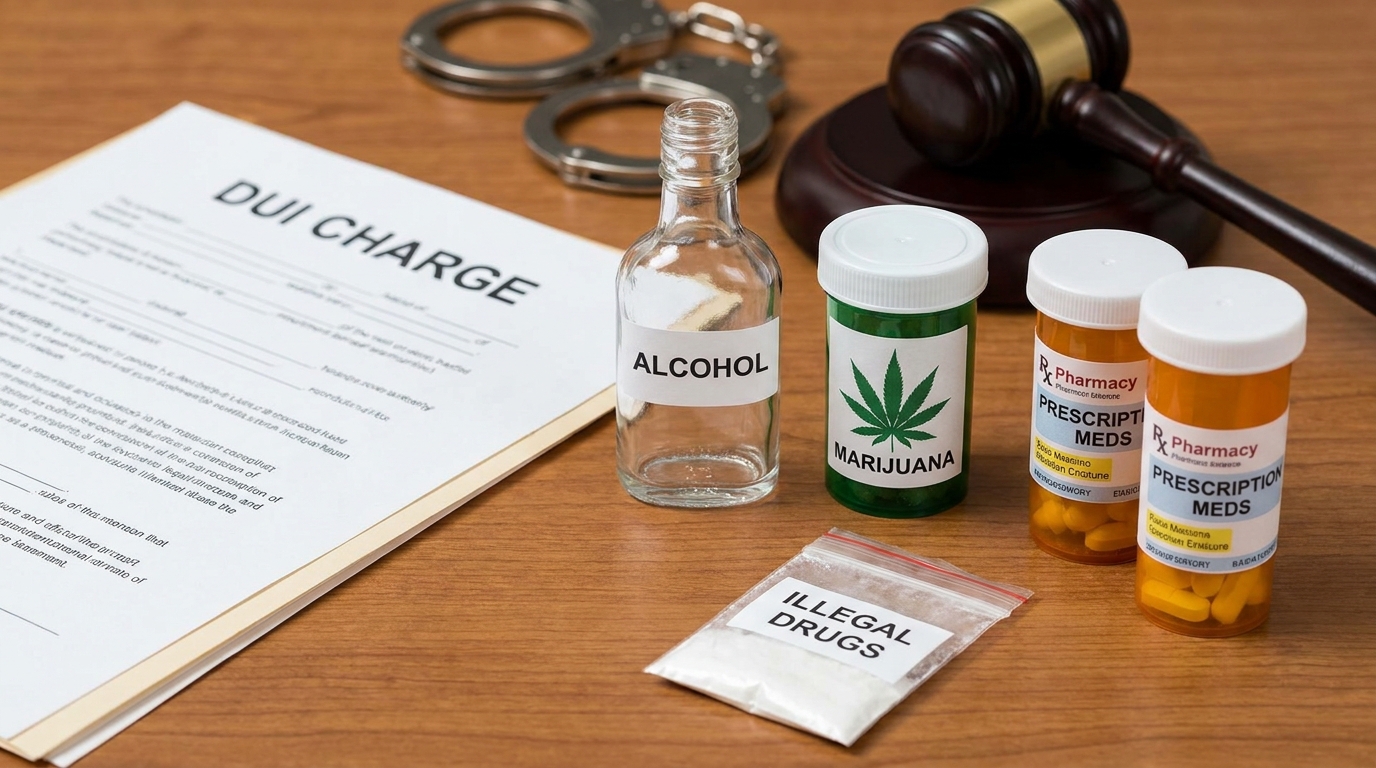
DUI stands for Driving Under the Influence. This is the term used in Arizona and many other states to refer to a DUI or DWI charge. A DUI charge may involve alcohol, illegal drugs, prescription medications, marijuana, or any substance that impairs a person’s ability to safely operate a vehicle.
DWI most commonly stands for Driving While Intoxicated or Driving While Impaired. Some states use DWI as their primary impaired driving offense. In other states, DWI and DUI are separate offenses with different legal definitions.
OUI stands for Operating Under the Influence. States such as Maine use OUI rather than DUI. The term “operating” means driving a vehicle while under the influence and can cover situations where a person has control over a motor vehicle even if it is not actively moving.
Although the acronyms differ, they generally describe similar conduct involving impaired driving. The biggest distinction is how each state chooses to define and prosecute the offense.
DUI vs. DWI vs. OUI: State-by-State Differences
One reason people become confused about the difference between a DUI and a DWI is that states apply these terms differently.
For example, Texas primarily uses DWI for adult impaired driving offenses. In Maryland, DUI and DWI are separate offenses, with DUI generally carrying more severe penalties than DWI. In Maine, OUI is the official charge used by prosecutors and law enforcement for a DUI or DWI case.
Arizona does not distinguish between DUI and DWI. If someone refers to a DWI in Arizona, they are generally talking about what Arizona law calls a DUI, which involves the influence of alcohol or drugs.
The terminology may change from state to state, but the goals remain similar:
- Prevent impaired driving
- Reduce alcohol-related crashes
- Hold impaired drivers accountable
- Protect public safety
Consider two examples:
Example 1
A driver from Texas moves to Phoenix and is arrested after blowing a 0.11% BAC during a traffic stop. Although the driver previously knew the offense as a DWI, Arizona will charge the person with DUI because that is the state’s legal terminology.
Example 2
A visitor from Maine is stopped in Scottsdale after consuming several alcoholic beverages. While Maine may call the offense OUI, Arizona prosecutors will pursue DUI charges under Arizona law.
The important point is that the acronym itself matters less than the conduct involved and the laws of the state where the arrest occurred.

How Arizona Defines a DUI Charge
Arizona’s primary DUI statute refers to driving under the influence of alcohol or drugs. A.R.S. § 28-1381.
Under A.R.S., the law outlines various offenses related to DUI and OUI. § 28-1381(A), a person can be charged with DUI if they:
- Drive or are in actual physical control of a vehicle while impaired to the slightest degree by alcohol or drugs.
- Have a blood alcohol concentration (BAC) of 0.08% or higher within two hours of driving.
- Have any amount of certain prohibited drugs or their metabolites in their system.
- Operate a commercial vehicle with a BAC of 0.04% or greater.
Many people mistakenly believe they cannot get a DUI unless their BAC exceeds 0.08%. Arizona law does not work that way.
A driver may still face a DUI charge if officers believe alcohol or drugs impaired their ability to safely operate a vehicle, even when the driver’s blood alcohol content falls below 0.08%.
Arizona also recognizes the concept of actual physical control. This means a person does not necessarily have to be driving to get a DUI. Courts examine factors such as:
- Whether the vehicle was running
- Where the vehicle was located
- Whether the person was in the driver’s seat
- Whether the person could readily operate the vehicle
For example, someone sleeping in a vehicle in Tempe with the engine running could potentially face a DUI charge depending on the circumstances.
DUI Penalties in Arizona
Arizona has some of the toughest DUI laws in the country. Even a first-time DUI can lead to jail time, fines, license consequences, ignition interlock requirements, and increased insurance costs.
The severity of the penalty often depends on the driver’s BAC level and criminal history.
A standard DUI typically involves a BAC between 0.08% and 0.149%. An Extreme DUI applies when the BAC reaches 0.15% to 0.199%, indicating a high amount of alcohol in the system. A Super Extreme DUI applies when the BAC is 0.20% or higher.
Penalties become increasingly severe as BAC levels rise. Repeat offenses can result in substantially longer jail sentences, larger fines, and felony charges.
Someone arrested in Phoenix, Mesa, Chandler, Glendale, Scottsdale, or Tempe faces the same Arizona DUI statutes, although court procedures may vary slightly by jurisdiction.
Attorney Arja Shah regularly helps clients understand their exposure to potential penalties and identifies opportunities to reduce charges, challenge evidence, or negotiate favorable outcomes.
Arizona DUI Penalties Table
| Offense | BAC Level | Minimum Jail | Additional Penalties | Statute |
|---|---|---|---|---|
| Standard DUI, First Offense | 0.08% to 0.149% | 10 Days (some may be suspended) | Fines, alcohol screening, ignition interlock device | A.R.S. § 28-1381 |
| Extreme DUI, First Offense | 0.15% to 0.199% | 30 Days | Higher fines and longer interlock requirements | A.R.S. § 28-1382 |
| Super Extreme DUI, First Offense | 0.20% or Higher | 45 Days | Substantial fines and lengthy interlock requirements | A.R.S. § 28-1382 |
| Second DUI Within 7 Years | Any qualifying BAC | 90 Days Minimum | Longer license consequences and increased penalties | A.R.S. §§ 28-1381, 28-1382 |
Drug-Related DUI Charges in Arizona
Many people associate DUI and DWI charges exclusively with alcohol. Arizona law is much broader.
Under A.R.S. § 28-1381(A)(3), a person can be charged with DUI for having certain drugs or drug metabolites in their body.
These cases may involve:
- Marijuana
- Cocaine
- Methamphetamine
- Prescription medications
- Certain narcotic drugs
Arizona prosecutors do not need a BAC result in these cases because alcohol is not the issue. Instead, the focus shifts to blood test results, officer observations, toxicology evidence, and impairment indicators.
This has become increasingly important since marijuana legalization. Legal marijuana possession does not create immunity from DUI prosecution. A driver in Scottsdale or Mesa may still face impaired driving charges if officers believe marijuana affected the person’s ability to safely operate a vehicle.
Drug-related DUI cases often involve complicated scientific evidence that requires careful review by an experienced defense attorney.
Common Defense Strategies for DUI and DWI Charges
Every DUI case is unique, but several defense strategies frequently arise in Arizona impaired driving cases, often focusing on the influence of alcohol or drugs.
1. Lack of Reasonable Suspicion for the Traffic Stop
Police generally must have a lawful reason to initiate a traffic stop. If the stop violated constitutional protections, evidence obtained afterward may be challenged.
2. Improper Field Sobriety Testing
Field sobriety tests are not always reliable. Medical conditions, fatigue, injuries, age, anxiety, and uneven pavement can affect performance.
3. Inaccurate Breath Test Results
Breath testing devices require proper calibration and maintenance. Equipment issues can sometimes produce inaccurate BAC readings.
4. Blood Sample Contamination
Blood evidence must be collected, stored, and analyzed properly. Errors in handling procedures may affect the reliability of results.
5. Lack of Actual Physical Control
In some cases, prosecutors cannot prove a person was actually driving or exercising actual physical control of a vehicle.
6. Constitutional Rights Violations
Illegal searches, unlawful detentions, and other constitutional violations may provide grounds to suppress evidence.
7. Insufficient Evidence of Impairment
Even when alcohol is present, prosecutors must prove impairment or a qualifying BAC. Weak evidence may create opportunities to challenge the state’s case.
Attorney Arja Shah carefully reviews police reports, body camera footage, laboratory records, and witness statements to identify weaknesses that may support a favorable resolution in a DUI or DWI charge.
Frequently Asked Questions About DUI vs. DWI
1. Is there a difference between a DUI and a DWI in Arizona?
No. Arizona uses the term DUI. While some people refer to a DWI charge, Arizona law does not recognize DWI as a separate offense.
2. What does OUI mean?
OUI stands for Operating Under the Influence. Some states use OUI instead of DUI when describing impaired driving offenses.
3.Can I get a DUI if my BAC is below 0.08%?
Yes. Arizona allows DUI charges when a driver is impaired to the slightest degree, even if their blood alcohol content is below 0.08%.
4. Can prescription medication lead to a DUI charge?
Yes. Prescription drugs can result in impaired driving charges if they affect a person’s ability to safely operate a vehicle.
5. Is Arizona tougher on drunk driving than other states?
Arizona is widely considered one of the strictest states regarding DUI enforcement and penalties.
6. Will I lose my driver’s license after a DUI arrest?
Potentially. Administrative license consequences and ignition interlock requirements frequently accompany DUI convictions.
7. Should I hire a DUI defense attorney after an arrest?
Yes. DUI cases often involve technical, legal, and scientific issues, particularly concerning the influence of drugs or alcohol. A defense attorney can review evidence, identify weaknesses, and protect your rights throughout the process.
Important Things to Remember
- DUI, DWI, and OUI are impaired driving acronyms used by different states.
- Arizona uses the term DUI rather than DWI or OUI.
- A DUI charge can involve the influence of alcohol, marijuana, illegal drugs, or prescription medications.
- Arizona law allows DUI charges for impairment even below a 0.08% BAC.
- Actual physical control can lead to a DUI charge even if the vehicle is not moving.
- Extreme DUI and Super Extreme DUI offenses carry enhanced penalties.
- Repeat offenses can result in significantly harsher consequences.
- Drug-related DUI cases often involve complex toxicology evidence that can result in a DUI charge.
- Several defense strategies may be available depending on the facts of the case.
- Speaking with a qualified DUI lawyer as early as possible can make a significant difference in your case.
How Shah Law Firm Can Help

A DUI arrest can be overwhelming, especially when you are trying to understand unfamiliar terms like DUI, DWI, OUI, BAC, implied consent, ignition interlock devices, and Arizona’s strict impaired driving laws. The good news is that an arrest for DUI does not automatically mean a conviction; there are often defenses available.
Attorney Arja Shah has spent nearly 20 years defending clients charged with DUI and other criminal offenses throughout Phoenix, Scottsdale, Tempe, Mesa, Chandler, Glendale, and surrounding Arizona communities. She understands how prosecutors build DUI cases and how to identify weaknesses in the evidence.
Shah Law Firm has achieved more than 3,000 successful case victories and provides individualized representation focused on protecting each client’s future. Whether the issue involves a standard DUI, Extreme DUI, Super Extreme DUI, or a drug-related impaired driving charge, Arja Shah works aggressively to pursue the best possible outcome.
Strong relationships with Arizona prosecutors, extensive courtroom experience, and effective plea-negotiation skills enable Shah Law Firm to provide strategic representation at every stage of a DUI case. Every client receives a free one-on-one consultation with a lawyer to discuss their circumstances and potential defense options.
If you have been arrested for a DUI in Arizona, contact Shah Law Firm today at (602) 560-7408 to schedule a confidential consultation and learn how an experienced DUI defense attorney can help protect your rights and driving privileges.

