





Can Loud Music Lead to a Disorderly Conduct Charge in Arizona?
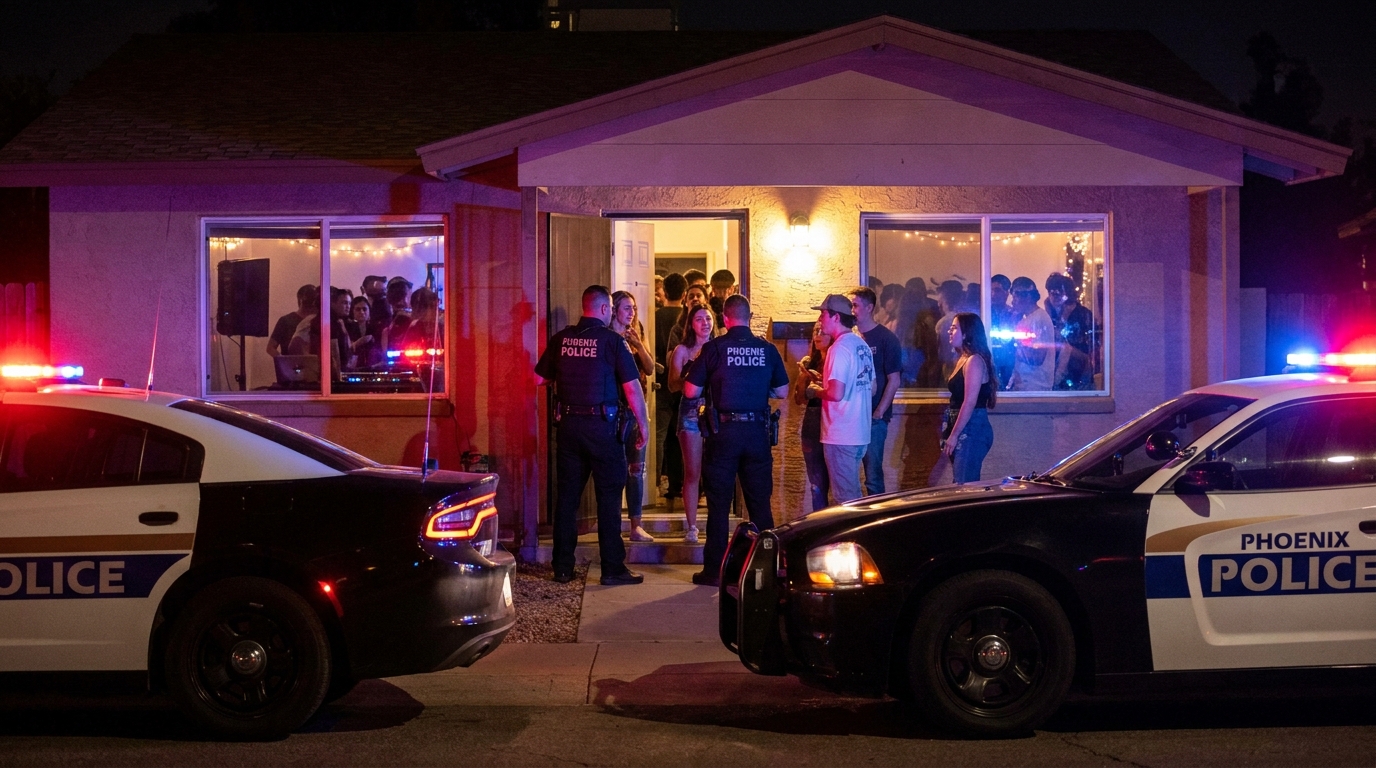
Yes, loud music disorderly conduct can become a criminal issue in Arizona. A party, parked car, or home stereo may prompt a complaint if the sound disrupts other people. Whether police make an arrest depends on the facts, including the volume, time, location, and response to warnings. As of 2026, attorney Arja Shah has defended more than 3,500 clients facing serious charges.
Not every noise dispute supports a disorderly conduct charge. The prosecutor must prove the elements of the offense, including the required mental state.
Local noise rules vary by city, so an event in Phoenix could involve different local standards than one in Scottsdale or Mesa. State law may still apply in each city.
Shah Law Firm, PLLC provides individualized service because criminal accusations can affect work, family, and daily life. Our team listens to the client, studies the evidence, and explains each available option in clear terms. We understand that legal knowledge is only one part of guiding someone through a stressful case. Outcomes depend on the specific facts and available evidence.
Quick Answers
Loud music can support a disorderly conduct allegation when a person intentionally or knowingly disturbs another person’s peace by making unreasonable noise. Volume alone does not decide the case because context and intent also matter.
- Arizona’s disorderly conduct statute covers unreasonable sound.
- A warning is relevant, but it is not the only evidence police may consider.
- Most nonweapon allegations are handled as a class 1 misdemeanor.
- A weapon allegation can change the offense to a class 6 felony.
- Videos, witnesses, messages, and police recordings may affect the defense.
Table of Contents
- What Does A.R.S. § 13-2904 Say About Disorderly Conduct?
- When Can Loud Music Support an Arizona Criminal Charge?
- What Are the Penalties, Jail Time, and Fines?
- How Can a Criminal Defense Lawyer Challenge the Charge?
- Frequently Asked Questions About Loud Music and Disorderly Conduct
- How Shah Law Firm, PLLC Can Help with Loud Music Disorderly Conduct in Arizona
What Does A.R.S. § 13-2904 Say About Disorderly Conduct?
Disorderly conduct is conduct intended or known to disturb the peace or quiet of a neighborhood, family or person. Under current Arizona law, A.R.S. § 13-2904 lists several ways a person may commit the offense. The code section covers much more than sound. For a broader overview, see our guide to disorderly conduct under ARS 13-2904
The statute applies when someone acts with intent to disturb the peace or knows that the conduct will do so. That mental state is important. A prosecutor may use direct statements, prior warnings, messages, or surrounding events to argue that a defendant acted intentionally or knowingly.
The law identifies conduct that may include:
- Fighting, violent acts, or seriously disruptive behavior.
- Making unreasonable noise.
- Using abusive or offensive language or gestures in a manner likely to provoke immediate physical retaliation.
- Creating a protracted commotion to stop a lawful meeting, gathering or procession.
- Refusing to obey a lawful order to disperse that protects public safety.
- Recklessly handling, displaying, or discharging a deadly weapon.
Statutory paragraph 1 addresses fighting, violence, and seriously disruptive behavior. Other provisions address an utterance or display, a lawful meeting, and a lawful order to disperse.
The words disturb the peace or quiet do not turn every annoying act into a crime. The prosecution still must prove every element beyond a reasonable doubt, which protects the defendant’s due process rights.
Published case law includes Hockett v. City of Tucson, 139 Ariz. 317 (Ct. App. 1984). Any precedent must be read with the current statute and the facts of the pending case. Attorney Arja Shah has been selected to the Super Lawyers list since 2015, experience that supports her review of fact-specific criminal allegations. The firm’s Lawful.com listing also identifies its criminal practice focus.
When Can Loud Music Support an Arizona Criminal Charge?

Loud sound may support a charge when its volume and context show unreasonable noise made with the required intent or knowledge.
There is no single statewide volume level in A.R.S. § 13-2904 that decides every case. What is reasonable often depends on where, when, and how the sound occurred.
A police officer may consider several facts:
- The hour and length of the music.
- How far the sound traveled.
- Whether several residents reported the disturbance.
- Whether the person lowered the volume after a request.
- Whether yelling, fighting, alcohol, or another commotion occurred.
- What body camera footage and police reports show.
A daytime gathering may be viewed differently from amplified music late at night. Loud house parties can also lead to disorderly conduct allegations when the circumstances disturb surrounding residents. Sound near a hospital, apartment wall, or sleeping household may also receive closer attention. Whether someone calls the area a neighborhood or neighborhood, the setting matters when judging the quiet of a neighborhood.
A warning is not listed as a required element in the state statute. Still, refusing to lower the volume may be used as evidence of knowledge or intent.
A person does not commit this specific offense merely because someone dislikes the music. It is important to examine whether the sound was truly unreasonable and whether the person knew it would disturb others.
Noise complaint charges Arizona residents encounter may also involve a city ordinance. A local police department might cite a municipal rule, the state statute, or both, depending on the event. Laws vary among local jurisdictions, and a city violation is not automatically the same as a state criminal charge.
The National Top 100 Trial Lawyers has recognized Arja Shah, reflecting her litigation background when evidence is disputed. The firm’s Nolo.com profile provides additional information about its criminal defense work.
What Are the Penalties, Jail Time, and Fines?

Most disorderly conduct allegations under A.R.S. § 13-2904 are class 1 misdemeanor cases. An allegation involving the reckless handling, display, or discharge of a deadly weapon is generally classified as a class 6 felony. The possible result depends on the charged subsection, criminal history, evidence, and court rulings.
| Type of Allegation | Classification | Potential Penalty, Jail Time, and Fines |
|---|---|---|
| Unreasonable sound without a weapon claim | Class 1 misdemeanor | Up to six months in jail may apply under A.R.S. § 13-707. The court may also consider a fine and probation. |
| Fighting, abusive conduct, or failure to disperse | Usually a class 1 misdemeanor | Possible jail, a fine, probation, and court conditions depend on the facts and record. |
| Recklessly handling, displaying, or discharging a deadly weapon | Class 6 felony | Felony sentencing rules may apply. The range depends on criminal history and other sentencing factors. |
Arizona’s misdemeanor jail limits appear in A.R.S. § 13-707. Under A.R.S. § 13-802, a class 1 misdemeanor can carry a fine of up to $2,500 for an individual, plus applicable surcharges. A court may impose less, and some cases end without a conviction.
Probation terms are addressed in A.R.S. § 13-902. A person charged with disorderly conduct may face added conditions based on the alleged event. A charge tied to a qualifying family relationship could also receive a domestic violence designation under A.R.S. § 13-3601. Such a designation does not mean every family or person dispute is a felony.
Attorney Arja Shah holds a 10.0 Justia rating. That credential is relevant when clients assess counsel for misdemeanor and felony matters. Sentencing statutes are subject to interpretation and may change, so a defense attorney should confirm the law that applies when the case is heard.
How Can a Criminal Defense Lawyer Challenge the Charge?

A criminal defense lawyer can challenge the state’s proof, the investigation, or the legal basis for the accusation. The right approach depends on witness accounts, recordings, warnings, and the exact subsection listed in the complaint. There is no single defense that fits every case.
Common areas for investigation include:
- Whether the sound was unreasonable in that setting.
- Whether the accused had intent to disturb the peace or knew disturbance would occur.
- Whether witnesses could identify the source of the sound.
- Whether reports conflict with video, audio, or electronic records.
- Whether law enforcement had probable cause for an arrest or search.
- Whether protected speech was mistaken for criminal conduct.
Offensive speech alone presents constitutional concerns. The statutory language focuses on abusive or offensive language that is likely to provoke an immediate violent response. A prosecutor may need to show that the words were used in a manner likely to provoke immediate physical retaliation, not merely that they were rude or unpopular.
Defense work may include discovery, which is the exchange of evidence, and witness interviews. Counsel might file a motion to suppress unlawfully obtained evidence or seek dismissal when the proof does not meet the statute. Negotiation may also be appropriate, but the client decides whether to accept an offered resolution or proceed toward trial.
Our attorneys have represented people facing a wide range of criminal charges, including disorderly conduct and DUI allegations. Our approach starts with the client’s account, then compares it with reports, recordings, and applicable law. We work to give each client direct answers and individualized guidance rather than treating the case as a file number. Arja Shah’s Avvo Clients’ Choice Award reflects that focus on client service.
A person may appear pro se, meaning without counsel, but prosecutors and court rules can make the process difficult. Our legal team can review the summons, preserve evidence, communicate with the prosecutor, and prepare for hearings. The firm’s Better Business Bureau profile gives readers another way to review its business background.
Steps to Take After a Noise Related Citation
Preserve information before recordings, messages, or witness memories are lost. Avoid discussing case facts online.
- Save the citation, summons, and release paperwork.
- Record the date, time, location, and names of witnesses.
- Keep videos, doorbell footage, messages, and sound system records.
- Do not miss a listed court date.
- Consult an attorney before making statements about the event.
Frequently Asked Questions About Loud Music and Disorderly Conduct
1. How do you fight a disorderly conduct charge in Arizona?
You fight the allegation by testing each element and the reliability of the evidence. A lawyer may question whether the sound was unreasonable, whether the defendant had the required knowledge, and whether police followed lawful procedures. Possible goals could include dismissal, a reduced allegation, or another resolution, but the available options depend on the evidence.
2. Is yelling at someone considered disorderly conduct?
Yelling may qualify when it disturbs the peace through unreasonable noise or includes conduct covered by another part of the statute. Volume, duration, threats, location, and the surrounding event commonly matter. Mere anger or an argument does not by itself prove every element.
3. What are the consequences of a first-time disorderly conduct charge?
A first allegation is usually a class 1 misdemeanor unless it involves the weapon provision. A conviction could bring jail, probation, a fine, and other court orders. A first-time defendant’s lack of prior convictions may be relevant, but it does not require a particular result.
4. Can refusing to obey a police officer lead to a charge?
Refusal can support this offense when a person fails to obey a lawful order to disperse issued to maintain public safety during a fire, hazard, or other emergency. The order must fit the statute. A disagreement with a police officer does not automatically establish this element.
5. Can a protest or demonstration lead to disorderly conduct allegations?
A protest can lead to an allegation, but peaceful expression receives constitutional protection. Conduct such as a protracted commotion that stops a lawful gathering or procession may fall within the statute. Courts often examine the government’s interest, the speaker’s conduct, and due process concerns.
6. Can a noise allegation become a domestic violence case?
It is possible when the alleged offense involves a relationship listed in Arizona’s domestic violence law. Domestic abuse is not a single charge, and it is not automatically a felony. The underlying offense and relationship determine how the state may accuse the person.
This article is for informational purposes only and is not legal advice. Reading it does not create an attorney-client relationship; consult an attorney about your specific situation.
How Shah Law Firm, PLLC Can Help with Loud Music Disorderly Conduct in Arizona

If you are facing a citation or arrest after a noise complaint in Arizona, Shah Law Firm, PLLC can review the allegation and explain the next steps. During a confidential consultation, our firm will ask about the sound, location, warnings, witnesses, police contact, and available recordings. We have helped thousands of clients assess criminal cases, and Arja Shah has also been named among the Top 100 Attorneys by Phoenix Magazine.
To discuss a loud music disorderly conduct allegation, call (602) 560-7408 or use the firm’s contact form. Contacting the office does not by itself create an attorney-client relationship.

