




Can Drug Residue Lead to Possession or Paraphernalia Charges in Arizona?
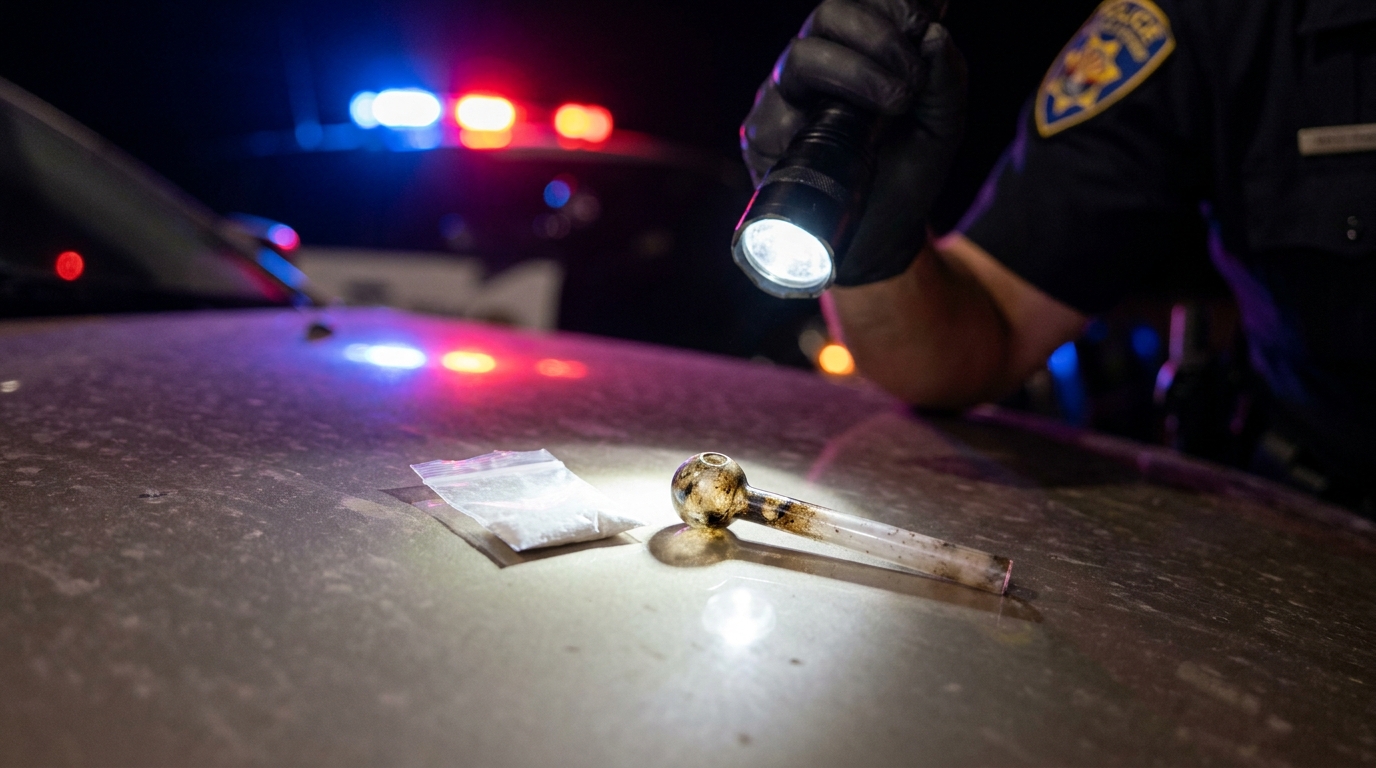
Drug residue charges Arizona prosecutors file may rest on a very small amount of a suspected substance. Trace material in a pipe, bag, syringe, or container could support a drug possession or paraphernalia charge. The prosecutor must still prove every required part of the offense. The amount is only one part of that analysis.
Shah Law Firm, PLLC provides individualized criminal defense because an accusation can affect a person’s work, family, and future. As of 2026, attorney Arja Shah has defended more than 3,500 clients facing life-altering charges. Our attorneys understand that sound representation requires careful guidance as well as knowledge of Arizona law. Each case receives a review of the search, laboratory evidence, alleged possession, and surrounding facts.
Quick Answers
Yes, trace residue may support an Arizona charge if testing identifies a controlled substance and other evidence links the person to it. The state generally must also prove knowing possession or knowing control of an object intended for drug use.
- There is not a simple safe minimum amount for every possession case.
- Residue may support either a substance charge, a paraphernalia charge, or both.
- Presence near an object does not by itself establish knowing control.
- Police searches and laboratory methods may be challenged.
- Potential penalties depend on the substance, charge, record, and case facts.
Table of Contents
- Can Trace Drug Residue Support an Arizona Possession Charge?
- What Counts as Drug Paraphernalia Under Arizona Law?
- What Must a Prosecutor Prove in a Residue Case?
- What Are the Potential Penalties, Jail Time, and Fines?
- How Can a Defense Lawyer Challenge Drug Residue Evidence?
- Frequently Asked Questions About Drug Residue Charges in Arizona
- How Shah Law Firm, PLLC Can Help With Drug Residue Charges in Arizona
Can Trace Drug Residue Support an Arizona Possession Charge?
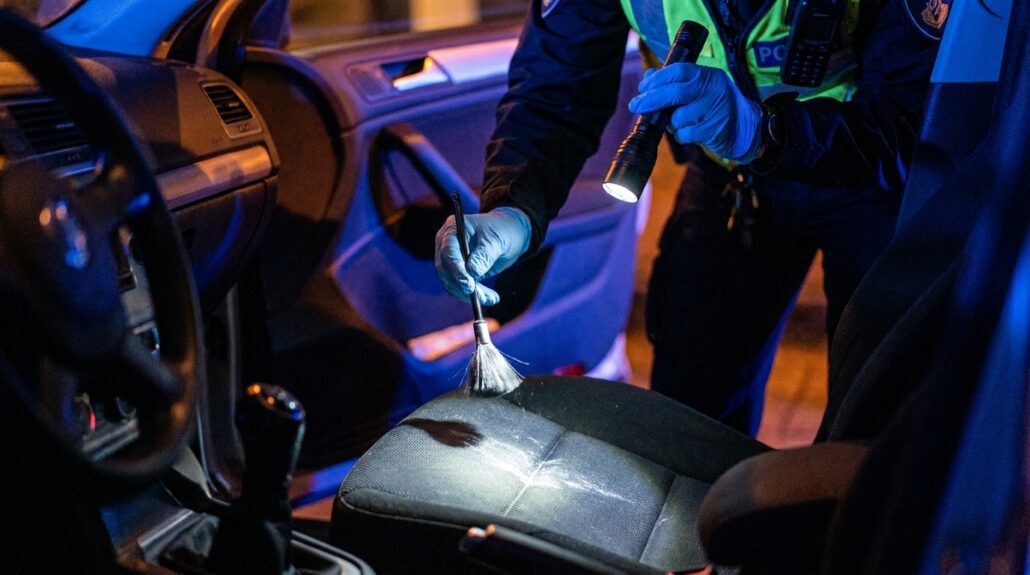
Yes, trace drug residue could support a possession charge in Arizona. A visible or usable quantity is not necessarily a required element of every offense. The state must still connect the substance and its location to the defendant.
In State v. Cheramie, 218 Ariz. 447, 189 P.3d 374 (2008), the court held that a usable quantity is not an element of simple possession. That precedent does not mean every microscopic finding proves guilt. Quantity may remain important circumstantial evidence of whether someone knew the substance was present.
Possession means more than being close to an item. Actual possession usually involves direct physical custody. Constructive possession may exist when a person knowingly exercises control over an item, even if it is elsewhere.
A prosecutor may rely on several facts together:
- Where police found the object and who could access that area
- Whether the object was found with personal property
- Statements, text messages, fingerprints, or other evidence of knowledge
- The type and amount of the drugs involved
- Laboratory drug testing that identifies the material
A person found in possession of a shared container may have a different defense than someone carrying it in a pocket. In many cases, access by several people weakens an inference of exclusive control. The firm’s Justia.com profile, which reflects a 10.0 rating, provides background on Arja Shah’s criminal practice.
The type of substance also matters. A dangerous drug allegation is generally addressed under A.R.S. § 13-3407. A narcotic drug allegation is generally governed by A.R.S. § 13-3408. These code sections cover more than possession, including sale, transfer, and drug manufacturing allegations.
What Counts as Drug Paraphernalia Under Arizona Law?
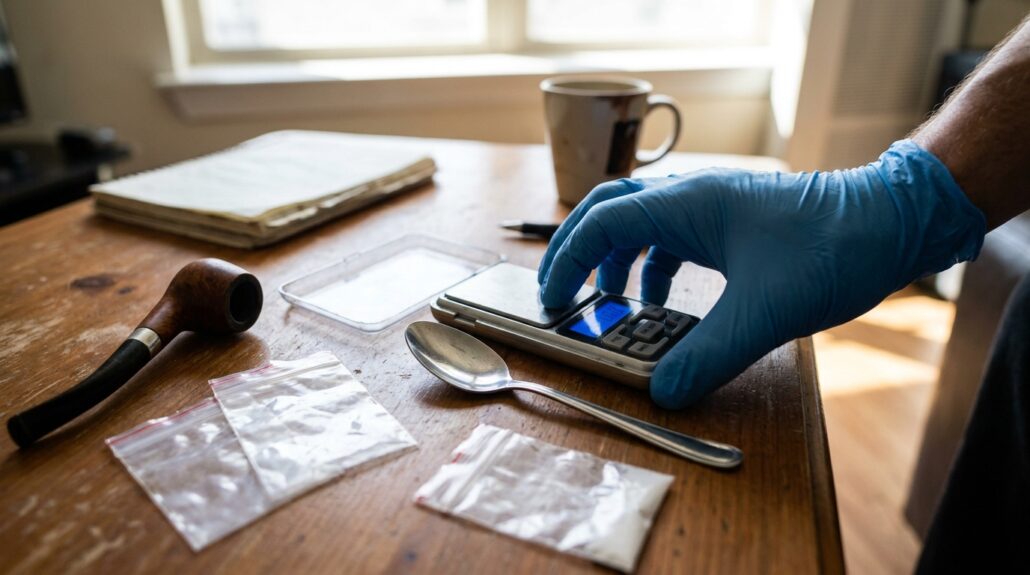
Drug paraphernalia is an object used, intended for use, or designed for certain activities involving controlled substances. An ordinary household object may become evidence because of residue, modifications, statements, or the setting in which police found it.
The definition appears in the Arizona Revised Statutes, A.R.S. § 13-3401. It covers items associated with growing, processing or preparing drugs, testing the effectiveness or purity of drugs, and packaging small quantities of drugs. It may also include an item used to store drugs, use in cutting drugs, use in compounding drugs, or storing or concealing drugs.
The statutory definition also addresses equipment intended to inhale or otherwise introduce into the human body a drug in violation of this chapter. That language may cover use in parenterally injecting drugs, injecting drugs into the human body, or other ways of introducing drugs into the human body. These phrases describe statutory categories. They do not decide whether a specific object is drug paraphernalia.
Police and courts may consider whether an item was designed for use as drug equipment, whether residue is present, and whether an owner made statements about it. They may also consider a prior violation of state or federal law relating to a controlled substance. Evidence of law relating to any drug must still be used within normal evidence rules and due process protections.
Examples that may receive scrutiny include:
- Pipes, syringes, straws, or modified smoking devices
- Bags or containers allegedly used to store illicit drugs
- Scales associated with weighing or packaging
- Materials allegedly used for processing or preparing drugs
- An object to facilitate a violation involving possession, production, or sale
Arizona’s statute separately addresses possession of drug paraphernalia and the delivery and advertisement of drug paraphernalia. Its language covers an intent to deliver drug paraphernalia and efforts to deliver drug paraphernalia knowing it is intended for use as drug equipment. It also addresses an intent to deliver or manufacture, deliver or manufacture with intent, and manufacture with intent to deliver certain items.
A prosecutor cannot rely only on a label. The issue is whether an object is drug paraphernalia under the facts and statutory factors. A spoon, bag, or scale often has lawful uses.
Residue and context may affect whether the object was intended or used as drug paraphernalia.
Under current Arizona marijuana laws, marijuana requires separate analysis. Lawful adult activity may differ from unlawful possession of marijuana, possession above lawful limits, or conduct by a person under the legal age. A lawyer should examine the specific amount, age, location, and purpose rather than assume all marijuana related objects are illegal.
What Must a Prosecutor Prove in a Residue Case?

A prosecutor must prove the charged offense beyond a reasonable doubt.
In a typical residue case, the central issues are identity of the substance, knowledge, possession or control, and the legality of the police investigation.
If someone is charged with possession of drug material, the state usually needs reliable evidence that the material was a prohibited controlled substance. A field test may support an investigation, but laboratory analysis commonly plays a larger role in court. Counsel may inspect laboratory reports, chain of custody records, analyst notes, and the quantity tested.
Knowledge is often disputed. Someone may not know that another person left a bag or pipe in a shared car. Anyone in control of drug paraphernalia is not automatically guilty merely because another person used the same room or vehicle. The prosecutor must connect that defendant to the control of drug paraphernalia and prove the required mental state.
Police conduct is another key issue. The Fourth Amendment limits unreasonable searches and seizures. The Fourth Amendment text and legal overview from Cornell Law School explains the warrant and probable cause principles that may apply. If law enforcement lacked lawful grounds for a stop, search, or seizure, an attorney may file a motion to suppress evidence.
Discovery is the formal exchange of case information. It may include police video, reports, photographs, body camera recordings, laboratory data, and witness statements. A deposition is less common in many Arizona criminal cases than in civil litigation, but other procedures allow counsel to investigate witnesses and evidence.
Our team has represented clients whose cases depended on shared spaces, disputed ownership, and small amounts of drugs. We approach each drug case by listening first, then testing the state’s account against the physical evidence. Arja Shah has been selected to the Super Lawyers list since 2015, a recognition relevant to her work handling serious charges.
What Are the Potential Penalties, Jail Time, and Fines?

Potential penalties depend on the exact statute, substance, quantity, prior record, and purpose alleged. A residue case might involve a misdemeanor, a class 6 felony, or a more serious felony drug allegation. Outcomes and sentencing options depend on the specific facts.
Possession or use of certain dangerous drugs is commonly charged under A.R.S. § 13-3407. Narcotic drug cases may proceed under A.R.S. § 13-3408. Possession of drug paraphernalia is addressed by A.R.S. § 13-3415, which generally classifies prohibited possession under that section as a class 6 felony.
| Potential allegation | Possible classification | Jail, prison, and fine considerations |
|---|---|---|
| Paraphernalia tied to alleged personal use | Often filed as a class 6 felony | Probation, treatment, custody, fines, and assessments may depend on eligibility and history. |
| Dangerous or narcotic substance residue | Often a felony charge | The substance, prior convictions, and other allegations may affect exposure. |
| Lawful use, unknowing possession, or testing dispute | Classification depends on what the state can prove | A successful defense motion or negotiation could change or end the prosecution. |
| Sale, transfer, or manufacturing allegation | Potentially more serious felony charges | Quantity, communications, packaging, and alleged purpose may increase sentencing risk. |
The table gives a general overview, not a sentencing calculation. Arizona criminal sentencing can depend on prior felony convictions, probation status, aggravating facts, and mitigation. A first-time drug accusation may also receive different treatment from a case involving prior convictions or allegations of sale.
Arizona voters adopted treatment focused rules for some possession of drugs for personal use. Eligibility may depend on the offense and criminal history. The time of a simple drug allegation, the substance, and later legal changes may also matter. Laws vary by state and remain subject to interpretation by Arizona courts.
A conviction may affect employment, housing, professional licensing, immigration status, and firearm rights. It is important to discuss collateral consequences, meaning effects beyond the sentence, before accepting any plea.
Depending on the conviction, a person may also want to determine whether any set aside or expungement options are available. Certain convictions may also raise questions about the later restoration of civil rightsThe firm’s Avvo.com profile notes a Clients’ Choice Award, reflecting recognition connected to client service.
How Can a Defense Lawyer Challenge Drug Residue Evidence?
A defense lawyer can challenge the search, substance identification, knowledge, control, and reliability of the state’s evidence. The strongest approach depends on where police found the item and how investigators handled it.
Common drug defense issues include:
- Whether police had legal grounds for the stop, detention, warrant, or search
- Whether the defendant knew about the material or object
- Whether several people had equal access to the location
- Whether contamination, collection, storage, or testing created doubt
- Whether statements followed a valid Miranda warning when one was required
- Whether evidence supports simple drug possession rather than sale or drug manufacturing
A motion to suppress asks the court to exclude evidence obtained through an unlawful search or seizure. Other motions may address disclosure failures, laboratory testimony, or inadmissible statements. Summary judgment is a civil procedure and is generally not the method used to resolve an Arizona criminal charge before trial.
Negotiation may also be appropriate. Counsel could seek dismissal, a reduced charge, diversion, treatment, or another resolution when supported by the facts and law. A paraphernalia charge tied to residue may call for a different strategy than felony drug possession charges based on larger quantities.
Our firm works with clients to explain choices in plain language and prepare them for each hearing. That means reviewing evidence with the client, discussing realistic risks, and advocating without treating the person as a case number. Arja Shah’s recognition by The National Top 100 Trial Lawyers supports her courtroom focused criminal defense work.
If you were arrested for drug allegations, avoid discussing the facts on social media or consenting to additional searches without advice. Preserve documents, names of witnesses, and information about who used the car, room, or container. Do not destroy or alter potential evidence.
When to Speak With an Attorney
It is advisable to seek legal guidance promptly when police seize suspected residue or ask about ownership. Early review may help preserve video, test data, and search issues.
- Police requested an interview or another search.
- A laboratory report is pending.
- The item came from a shared car, home, or bag.
- You received a citation, summons, release paperwork, or court date.
- The state alleges sale, delivery, or manufacture.
A Phoenix drug possession attorney can review the complaint and discovery before advising on a strategy. A drug possession lawyer may also identify deadlines stated in court papers. The USAttorneys.com profile for Arja A. Shah lists her criminal practice focus for people evaluating counsel.
Frequently Asked Questions About Drug Residue Charges in Arizona
1. Can you be charged with possession for residue?
Yes, a person may be charged with possession based on residue. The state still needs evidence that the material was prohibited and that the defendant knowingly possessed it. Trace drug possession Arizona cases often turn on laboratory results, location, access, and knowledge.
2. Is drug paraphernalia a felony in Arizona?
Possession of drug paraphernalia under A.R.S. § 13-3415 is generally classified as a class 6 felony. However, the actual result may depend on the evidence, criminal history, charge amendments, and available sentencing provisions. Conduct involving lawful marijuana may require a separate review.
3. How long do you go to jail for drug possession in Arizona?
There is no single jail term for every case. Potential custody depends on the drug, classification, prior record, probation eligibility, and other facts. In some cases, probation or treatment may be available, while other felony charges could carry prison exposure.
4. How long does Arizona have to charge you with a crime?
The filing period depends on the classification and circumstances. Certain events may pause or extend a limitation period, so a general date calculation might be wrong. Consult an attorney promptly if an investigation remains open because limitation rules and statutes are subject to change.
5. Can drug possession charges be dropped or reduced?
Yes, it is possible for criminal charges to be dismissed, reduced, or resolved through another option. A result may depend on search problems, weak proof of possession, unreliable testing, disclosure issues, or negotiation. The defendant, prosecutor, and court have different roles in that process.
6. Does residue automatically prove the object belonged to me?
No, residue does not automatically prove ownership or knowing control.
Police may collect evidence from a shared space, but the prosecutor must link the defendant to the item. Fingerprints, statements, access, personal property, and witness accounts could support or weaken that link.
As of September 2026, this article is for informational purposes only and is not legal advice. Reading it does not create an attorney-client relationship; consult an attorney about your specific situation.
How Shah Law Firm, PLLC Can Help With Drug Residue Charges in Arizona
 If you are facing Arizona charges based on trace material in a pipe, bag, syringe, vehicle, or shared room, Shah Law Firm, PLLC can assess the evidence. In a first conversation, our office will listen to what happened, identify the charge and court status, and explain the next practical steps.
Attorney Arja Shah has been named among the Top 100 Attorneys by Phoenix Magazine. Our experience includes helping people facing charges that may affect their liberty, work, and family. We can evaluate laboratory proof, alleged possession, police conduct, and possible defenses without promising a particular outcome.
Call (602) 560-7408 or use the firm’s contact page to request a confidential consultation about drug residue charges Arizona authorities have filed or may be investigating.