





How Long Does Arizona Have to File DUI Charges?
The Arizona DUI statute of limitations generally gives the state one year to start a misdemeanor DUI prosecution. A felony DUI charge may have a longer filing period. The correct deadline depends on the offense, the filing date, and any event that paused the clock.
Attorney Arja Shah has defended more than 3,500 clients facing serious criminal charges as of 2026. Our firm provides individual attention because a DUI case can affect work, driving, finances, and family life. We understand that useful representation requires clear guidance as well as knowledge of Arizona law.
A delayed filing does not necessarily mean the state missed its deadline. Prosecutors may wait for blood test results, reports, or other evidence before filing charges. Shah has been recognized by Expertise.com as a Best DUI Lawyer in Phoenix, reflecting the firm’s focus on DUI defense.
Quick Answers
Arizona generally has one year to begin a misdemeanor DUI prosecution and seven years for many felony prosecutions. The period may pause in certain situations, so the calendar alone does not resolve every case.
- Most standard DUI charges are prosecuted as misdemeanors.
- An aggravated DUI is generally prosecuted as a felony.
- Filing a complaint, information, or indictment may start the prosecution.
- An arrest and the formal filing of charges are separate events.
- A defense attorney can compare the alleged offense date with the court record.
Table of Contents
- What Is the Arizona DUI Statute of Limitations?
- How Does the Type of DUI Affect the Filing Deadline?
- When Does the Limitations Clock Start or Pause?
- Why Might Arizona DUI Charges Be Delayed?
- What Should You Do About Delayed DUI Charges?
- How Can a Lawyer Challenge a Late or Weak DUI Filing?
- Frequently Asked Questions About Arizona DUI Statute of Limitations
- How Shah Law Firm, PLLC Can Help with an Arizona DUI Statute of Limitations Issue
What Is the Arizona DUI Statute of Limitations?
A statute of limitations is a law that sets the period for starting a criminal prosecution. Under current Arizona law, the period usually depends on whether the alleged crime is a felony, misdemeanor, or petty offense.
A.R.S. § 13-107 generally provides seven years for a felony, one year for a misdemeanor, and six months for a petty offense. Some listed crimes have different rules or no standard time limit. A DUI attorney must first identify how the state classified the charge.
A prosecution is generally commenced when the state files an indictment, information, or complaint.
An indictment is a formal accusation issued through a grand jury. An information or complaint is another charging document used to bring the defendant before a court.
The defendant is the person accused of the crime. The state acts as the prosecuting party, much like a plaintiff in a civil case. The prosecutor must file the proper document within the applicable period, subject to the statute’s exceptions and its requirement to proceed without unreasonable delay.
Arja Shah has been selected to the Super Lawyers list since 2015. In our experience, checking a limitation issue requires more than counting from the arrest date. Counsel should review the offense date, charging document, filing stamp, service history, and any claim that time stopped running.
How Does the Type of DUI Affect the Filing Deadline?
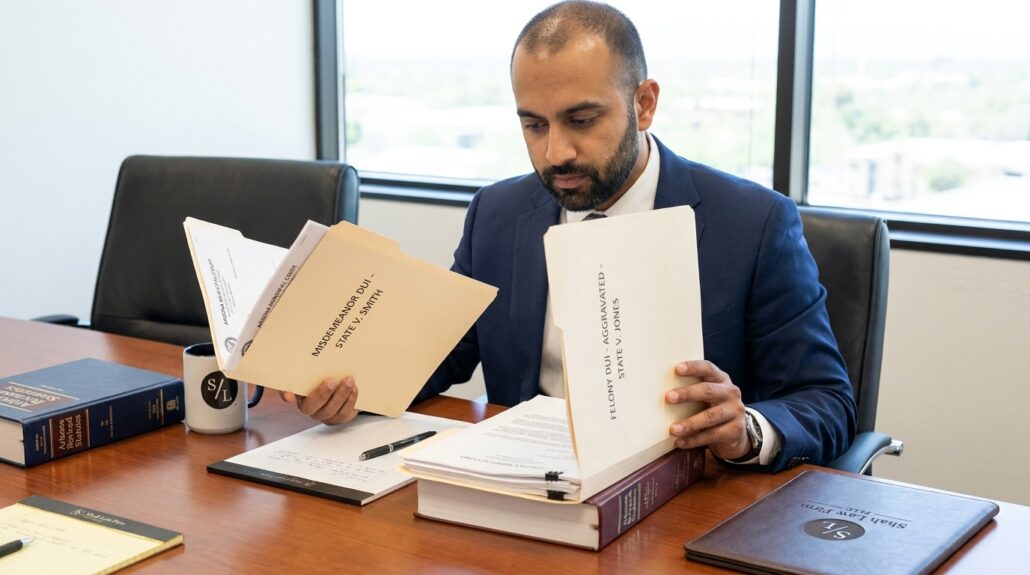
The type of DUI affects the deadline because Arizona uses different limitation periods for misdemeanors and felonies. Most standard DUI cases are misdemeanors, while aggravated DUI allegations are generally felonies.
A.R.S. § 28-1381 addresses driving or being in actual physical control while impaired, with a prohibited alcohol concentration, or with certain drugs in the body. A.R.S. § 28-1382 covers extreme and super extreme alcohol concentration allegations. These code sections generally describe misdemeanor offenses unless facts support another charge.
A.R.S. § 28-1383 defines aggravated DUI. Allegations may involve a suspended or restricted license, certain prior DUI matters, a required ignition interlock device, or a child passenger. The exact felony classification depends on the alleged facts.
The following table provides a general overview. It does not state a specific sentence because jail time, fines, assessments, license consequences, and other terms depend on the charge and case history.
| Potential Charge | Usual Level | Penalty, Jail Time & Fines |
|---|---|---|
| Standard DUI | Generally a misdemeanor | Potential jail, fines, assessments, screening, and driving restrictions |
| Extreme DUI | Generally a misdemeanor | Potential increased jail and financial terms based on the allegation |
| Super Extreme DUI | Generally a misdemeanor | Potential higher sentencing exposure and added driving consequences |
| Aggravated DUI | Generally a felony | Potential prison or jail exposure, fines, assessments, and felony consequences |
The firm’s Martindale.com profile identifies Arja Shah’s criminal defense practice. That background matters when a limitation question is tied to the offense level and potential sentencing exposure.
When Does the Limitations Clock Start or Pause?

The limitations clock generally starts on the day after every element of the alleged offense has occurred. It may pause when the accused is outside Arizona or has no reasonably ascertainable home in the state.
A.R.S. § 13-107 contains these timing and tolling rules. Tolling means that certain time does not count toward the filing period. Whether tolling applies depends on the facts, and the issue can be subject to interpretation by the court.
For example, a person may be stopped and released without receiving a criminal complaint. If the state later claims the person could not be located, the prosecutor might argue that part of the delay should not count. Defense counsel could examine addresses, license records, contact with law enforcement, and proof that the person remained available.
It is important to separate four dates:
- The date of the alleged driving conduct.
- The date of the arrest or traffic stop.
- The date a complaint, information, or indictment was filed.
- The date the defendant received notice or appeared in court.
The filing date often controls whether prosecution began on time, but later delay may raise other concerns.
Due process protects basic fairness in a criminal case. A severe delay might also affect access to witnesses, video, records, or other evidence, although those issues require a separate legal analysis.
Our team has handled DUI matters in which timing, court records, and laboratory evidence had to be reviewed together. The firm’s Lawyers.com profile lists its Phoenix criminal defense focus for people checking counsel’s background.
Why Might Arizona DUI Charges Be Delayed?

Arizona DUI charges may be delayed while police and prosecutors gather evidence or decide which offense to file.
A delayed DUI charge is not automatically invalid, even when months have passed since the stop.
Blood analysis commonly takes longer than a breath test. A laboratory may need time to identify alcohol, prescription medicine, cannabis, or another substance. Prosecutors might wait for a complete report before selecting charges.
Other common reasons for delay include:
- A report or body camera recording has not reached the prosecutor.
- A collision investigation remains open.
- The prosecutor asks an officer for more information.
- The case is returned for additional investigation.
- A felony allegation is presented to a grand jury.
- The court or agency is trying to locate the accused.
The criminal court process may begin with an arraignment, which is a hearing where the defendant learns the charge and enters a plea. Discovery follows in many cases. Discovery is the exchange of reports, test results, recordings, and other case evidence.
The Arizona Judicial Branch criminal law resources provide general court information for defendants, including people proceeding pro se, meaning without an attorney. Court resources can explain procedure, but they do not replace advice about a specific DUI filing deadline.
Shah received a 10.0 rating from Justia. Our approach is to explain the process in practical terms, identify the evidence that matters, and help clients prepare for each stage. We work to reduce uncertainty without making assumptions about the result.
What Should You Do About Delayed DUI Charges?

You should preserve documents, confirm whether a case has been filed, and speak with an Arizona DUI attorney. Do not assume that silence from the court means the matter has ended.
Consider taking these steps:
- Keep the citation, release paperwork, towing records, and property receipts.
- Write down what happened while your memory remains fresh.
- Save photographs, messages, location history, and witness contact details.
- Check your mail and address records for court notices.
- Avoid discussing case facts on social media.
- Ask counsel to review the court docket and charging date.
You should also track any separate administrative license matter. A criminal case and a driver’s license proceeding may follow different paths. A statute of limitations defense to criminal charges does not necessarily resolve an administrative action.
If you learn about a warrant or a new complaint, it is advisable to seek legal guidance before making statements. Anything said to an officer or prosecutor could become evidence. An attorney may arrange a court appearance, request discovery, and assess whether a motion to dismiss is supported.
When to Speak With an Attorney
Prompt review is especially useful when a long period has passed or the state alleges facts that could make the charge a felony.
- A complaint arrives months after the stop.
- The court reports an outstanding warrant.
- The case involves blood or drug testing.
- The state alleges prior DUI convictions.
- You lived outside Arizona after the incident.
Arja Shah received the Platinum Client Champion Award from Martindale Hubbell. The firm’s Better Business Bureau profile offers another source for people reviewing its business background.
How Can a Lawyer Challenge a Late or Weak DUI Filing?
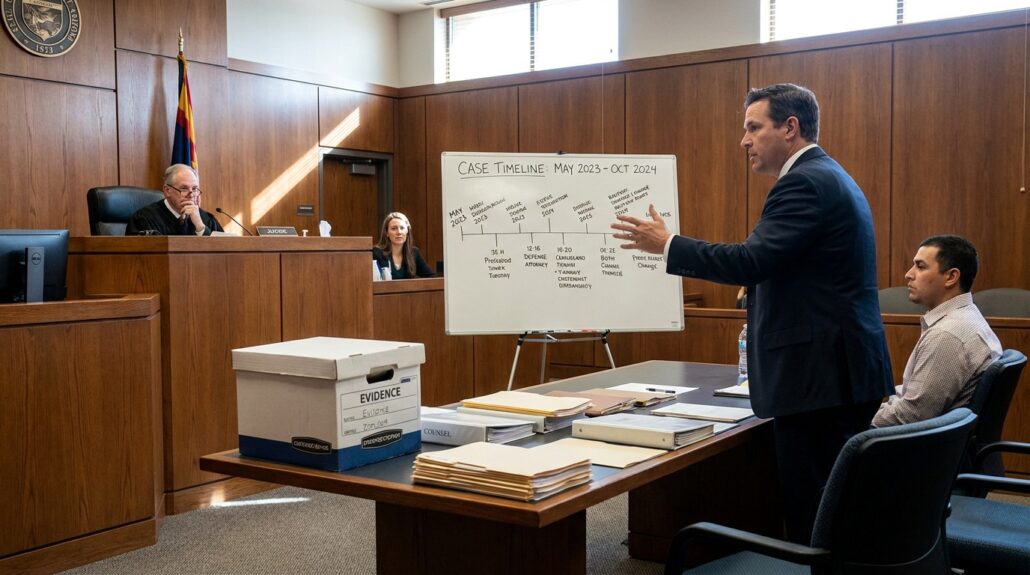
A lawyer can compare the statutory deadline with the actual filing record and challenge unsupported tolling claims.
Counsel may also test the state’s evidence even when the prosecutor filed the case on time.
A timing review typically addresses these questions:
- What offense does the charging document allege?
- Is that offense treated as a misdemeanor or felony?
- When did all alleged elements occur?
- When did the clerk file the complaint, information, or indictment?
- Does the state claim that any time was excluded?
- Did the prosecution continue without unreasonable delay?
If the record supports a limitation defense, an attorney may file a motion to dismiss. A motion is a formal request for a ruling. The prosecutor may respond, and the judge may hold a hearing before deciding the issue.
Other defenses may concern actual physical control, impairment, the traffic stop, field tests, chemical testing, or the handling of a blood sample. The facts could also raise negligence or reliability concerns about evidence collection. Those concerns do not automatically create civil liability or defeat a charge, but they may affect what evidence the court allows.
In many cases, counsel also reviews body camera footage and conducts witness interviews. A deposition is sworn testimony taken before trial, although its availability and use depend on criminal procedure. A summary judgment process common in civil litigation is generally not the standard method for deciding a criminal DUI case.
Our attorneys advocate through focused factual and legal review. Shah has also been named among The National Top 100 Trial Lawyers. That recognition supports the firm’s courtroom work, while outcomes still depend on the evidence and law in each case.
Frequently Asked Questions About Arizona DUI Statute of Limitations
1. How long does Arizona have to charge you with a misdemeanor DUI?
Arizona generally has one year to start a misdemeanor prosecution under A.R.S. § 13-107. The period may be affected by tolling or another statutory rule. A lawyer should compare the offense date with the official filing record.
2. Can Arizona file DUI charges after one year?
Arizona might file after one year if the alleged offense is a felony or if excluded time changes the calculation. The state could also argue that it started the case within the period by filing a valid charging document. Whether the filing was timely depends on the charge and procedural history.
3. Does the deadline run from the arrest date or blood test result?
The period generally concerns when the offense was committed, not when a laboratory completed its report. The clock usually starts the next day under the limitation statute. A blood result may explain delayed DUI charges, but it commonly does not create a new offense date.
4. How will I know whether DUI charges were filed?
You may receive a summons, complaint, warrant notice, or court date. In some cases, an attorney can check available court records and contact the relevant agency. Because court systems differ, the correct search method depends on where the case was filed.
5. Can a DUI case be dismissed because charges were filed late?
A court may dismiss a prosecution if the applicable limitation period expired and no exception applies. The defendant typically must raise the issue through the proper motion. The judge will consider the statute, court record, and the parties’ arguments.
6. What if I moved away from Arizona after a DUI arrest?
Time outside Arizona may potentially be excluded from the limitation calculation. The statute also addresses periods when a person’s Arizona residence cannot reasonably be determined. A move does not by itself answer the deadline question, so counsel should review the dates and address evidence.
As of September 2026, this article is for informational purposes only and is not legal advice. Reading it does not create an attorney-client relationship; consult an attorney about your specific situation because laws and their application are subject to change.
For related issues affecting nonresidents, see our guide to being charged with a DUI in Arizona while living out of state.
How Shah Law Firm, PLLC Can Help with an Arizona DUI Statute of Limitations Issue
 If you are facing delayed DUI charges or questioning the DUI filing deadline in Arizona, Shah Law Firm, PLLC can review the alleged offense date, charge level, court filing, and possible tolling claims. During a first conversation, our office will listen to what happened, identify the records needed, and explain practical next steps.
Arja Shah has received the Avvo Clients’ Choice Award for her client service. To discuss an Arizona DUI statute of limitations concern, call (602) 560-7408 or use the firm’s contact page.

