





After a DUI arrest in Maricopa County, one of the most immediate questions is often, “How much will bail cost to get out of jail?”
Arizona has no single DUI bail amount. A person arrested for a misdemeanor DUI may be released without posting monetary bail, while someone facing felony aggravated DUI charges may have a substantial bond set.
The amount depends on the charge, criminal history, prior court appearances, public safety concerns, and other facts presented to the judge, including whether the defendant can post bail.
Table of Contents
- How Bail Works After a DUI Arrest in Maricopa County
- Misdemeanor vs. Felony DUI Bail Amounts in Maricopa County
- Why Aggravated DUI Can Lead to Higher Bail or Pretrial Detention
- Factors That Can Raise or Lower a DUI Bail Amount
- What Happens From DUI Arrest Through Arraignment
- DUI Defense Strategies That Can Affect the Criminal Case and Release Conditions
- FAQs About DUI Bail in Maricopa County
- Important Things to Remember
- How Shah Law Firm Can Help
Arizona law also treats bail differently from a fine or criminal sentence. Bail is part of the pretrial process. Its purpose is to help assure that a defendant returns to court and, when appropriate, protect other people or the community while the criminal case is pending. Current Arizona court rules require an individualized decision and state that a court may not rely solely on a charge-based bond schedule.
That distinction matters when comparing a misdemeanor DUI with felony aggravated DUI in Maricopa County. Current court records show just how wide the difference can be.
Published Maricopa County Superior Court records from 2026 include class 4 aggravated DUI defendants listed as released, a defendant with a $5,000 bond, and another defendant charged with two counts of aggravated DUI who was listed with a $200,000 bond. These are individual cases, not preset bail amounts, but they show why no one can accurately quote a single standard price for an Arizona DUI arrest.
How Bail Works After a DUI Arrest in Maricopa County
Arizona law begins with the principle that defendants charged with crimes are generally eligible for pretrial release unless a constitutional exception applies. Article 2, Section 22 of the Arizona Constitution states that people charged with crimes are bailable by sufficient sureties, subject to specified exceptions. The Constitution also identifies the purposes of bail as ensuring the defendant’s appearance and protecting witnesses, victims, other people, and the community.
ARS § 13-3967, “Release on bailable offenses before trial,” provides the statutory framework Arizona judges use when setting release conditions. The statute says a person charged with a bailable offense may be released on their own recognizance or on bail in an amount specified by the judicial officer. It then gives the court numerous factors to consider when deciding the method of release and the amount of bail.
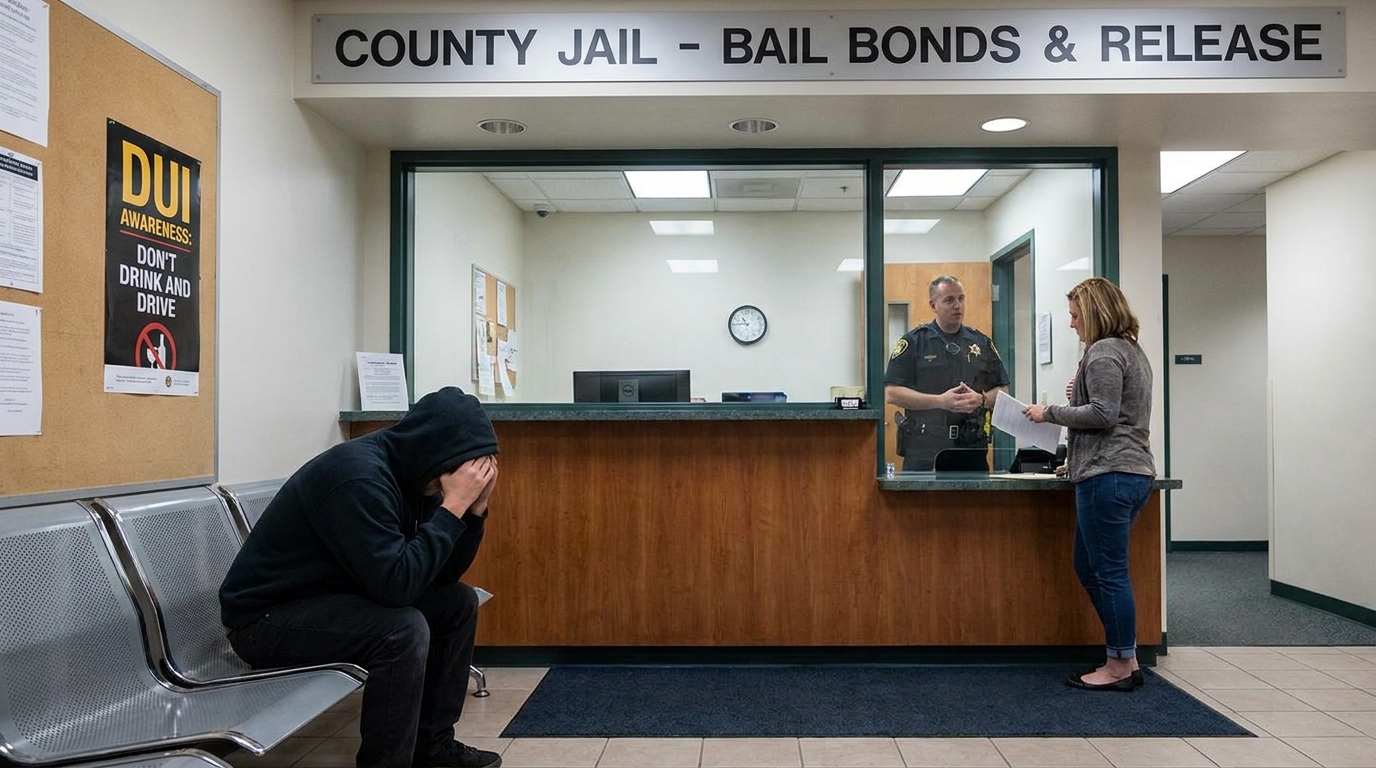
In plain English, a DUI charge does not come with an automatic price tag. A judge considers the individual defendant and the facts of the case. One defendant may be released on their own recognizance, commonly called an OR release, meaning no monetary bail has to be posted. Another defendant facing a similar DUI charge may be required to post a secured bond because the court sees a greater risk that the person will fail to appear or pose a public safety concern.
Arizona Rule of Criminal Procedure 7.3 places another important restriction on monetary bail. If a court decides money is needed as a condition of release, it must consider the defendant’s risk of nonappearance, danger to others or the community, and financial circumstances. The rule also says the court may not rely on a schedule of charge-based bond amounts and should use the least onerous monetary condition in the lowest amount needed.
That rule is important because older web pages sometimes quote preset Maricopa County bail amounts. For example, a 2015 Maricopa County administrative order contained a $500 presumptive pre-appearance bond for a class 1 misdemeanor. That older schedule should not be presented as the current answer to “How much is DUI bail?” Current Rule 7.3 requires an individualized decision, not a charge-based schedule.
Misdemeanor vs. Felony DUI Bail Amounts in Maricopa County
Most standard Arizona DUI cases are misdemeanors. ARS § 28-1381, officially titled “Driving or actual physical control while under the influence,” makes a conviction under the section a class 1 misdemeanor. The statute covers several forms of DUI, including driving while impaired to the slightest degree and driving with a blood alcohol concentration of 0.08 or more within two hours under the conditions stated in the law.
An extreme DUI is also generally a class 1 misdemeanor. ARS § 28-1382, “Driving or actual physical control while under the extreme influence of intoxicating liquor,” applies when the alcohol concentration is 0.15 or greater within the statutory period. The statute separately addresses a BAC of 0.20 or more, which is commonly called a super extreme DUI, although the statutory section itself uses the term extreme DUI. A conviction under ARS § 28-1382 is classified as a class 1 misdemeanor.
For a misdemeanor DUI, Maricopa County courts have no standardized rule establishing a set dollar range. A person could receive an OR release requiring no monetary bail, or a judge could impose monetary bail based on the circumstances. Less serious charges, strong community ties, a stable address, employment, and a history of appearing for court can support release without a large financial condition. The Maricopa County Attorney’s Office confirms that it sets release conditions at the initial appearance and that defendants accused of less serious or nonviolent offenses, or those with sufficient community ties, may be released on their own recognizance.
Felony aggravated DUI is very different. Current official Maricopa County records provide useful examples, but they also prove why a single “average bail” figure can be misleading. A March 2026 Superior Court administrative order lists a defendant facing two class 4 aggravated DUI counts with a $5,000 bond, while another aggravated DUI defendant in that same court record was listed as released on bail. An April 2026 administrative order identifies another defendant charged with two class 4 aggravated DUI counts with a $200,000 bond, while a different defendant facing four class 4 aggravated DUI counts was listed as released.
These official examples support a practical answer: misdemeanor DUI can result in an OR release or an individualized monetary bond, while published 2026 Maricopa County felony aggravated DUI records show outcomes ranging from release to bonds of $5,000 and as high as $200,000. The $200,000 figure should not be read as a normal or recommended aggravated DUI bail bond amount. It is an example of how high an individualized bail bond can become in a particular criminal case involving drunk driving.
| DUI Charge | Classification | Current Bail Guidance | Authority / Maricopa Example |
| Standard DUI | Class 1 misdemeanor | OR release or individualized monetary bail. No current preset DUI amount. | ARS § 28-1381; ARS § 13-3967; Ariz. R. Crim. P. 7.3 |
| Extreme or Super Extreme DUI | Class 1 misdemeanor | OR release or individualized monetary bail. BAC and other facts may affect release conditions. | ARS § 28-1382 |
| Aggravated DUI | Usually Class 4 felony under ARS § 28-1383(A)(1), (2), (4), or (5) | Published 2026 Maricopa County records include released defendants, a $5,000 bond, and a $200,000 bond. | ARS § 28-1383; Maricopa County Superior Court AO 2026-030 and AO 2026-048 |
| Aggravated DUI With Passenger Under 15 | Class 6 felony under ARS § 28-1383(A)(3) | Individualized release decision. Felony status alone does not create one automatic bail amount. | ARS § 28-1383(O)(2); ARS § 13-3967 |
Why Aggravated DUI Can Lead to Higher Bail or Pretrial Detention
ARS § 28-1383, officially titled “Aggravated driving or actual physical control while under the influence,” identifies several circumstances that turn a DUI into a felony. These include committing DUI while the person’s driving privilege is suspended or revoked under qualifying circumstances, committing a third qualifying DUI within 84 months, committing DUI while required to use a certified ignition interlock device, and committing DUI while driving the wrong way on a highway. Those offenses are generally class 4 felonies. DUI with a passenger under 15 is a class 6 felony.
A felony label does not automatically mean that someone will remain in jail. It does, however, give the court more serious allegations to consider when deciding whether release conditions are sufficient. ARS § 13-3967 directs the judge to consider the nature of the offense, weight of the evidence, prior arrests and convictions, evidence of danger to the community, financial resources, employment, residence, and prior record of appearing in court.
Arizona’s Constitution also permits pretrial detention without bail in certain felony cases. One constitutional basis applies when the proof is evident or the presumption great, the defendant poses a substantial danger to another person or the community, and no available release conditions will reasonably assure safety. Aggravated DUI is not automatically a no-bail offense, so the court must make the required findings before using this type of preventive detention.
Consider two examples. A Phoenix driver with no meaningful criminal history is arrested for a misdemeanor DUI after a traffic stop, has a stable home and job, and has never missed court. The judge could determine that release conditions without a monetary bond are sufficient. That person might leave custody without paying bail.
Now consider a Tempe driver accused of felony aggravated DUI based on a third DUI within 84 months, with prior failures to appear and evidence of repeated driving while the person’s license was revoked. Those additional facts could give a prosecutor stronger arguments for a substantial bond and stricter pretrial conditions. The judge still decides the amount, but the risk analysis is very different.
This is one reason early representation can matter. Attorney Arja Shah can present facts that may not be obvious from the arrest report, such as employment, family responsibilities, local residence, prior compliance with court orders, treatment participation, or weaknesses in the allegation that the DUI qualifies as a felony.
Factors That Can Raise or Lower a DUI Bail Amount
Bail should not reflect how angry a judge is about an alleged DUI offense. Bail is a pretrial tool, not punishment for a DUI conviction. ARS § 13-3967 lists factors judges may consider when deciding the method of release and the bail amount.
A defendant’s criminal history can carry substantial weight. Prior DUI convictions, felony convictions, pending criminal charges, or arrests for serious offenses may lead the court to focus more closely on public safety. A second DUI or repeat extreme DUI may also create concerns that are different from those presented by a defendant with little or no prior record.
The defendant’s record of court appearances is another major issue. ARS § 13-3967 specifically directs courts to consider previous court appearances, flight to avoid prosecution, and failure to appear. Someone who has repeatedly missed court may face a higher bail amount than a similarly charged person who has consistently appeared when ordered.
Community connections can work in the other direction. Employment, family ties, financial resources, character, length of residence in the community, and whether the defendant lives in Arizona are all statutory considerations. A defense attorney may use these facts when asking the court for OR release, supervised release, or a lower monetary condition.
The allegations also matter in a drunk driving defense strategy. A DUI arrest involving a collision, wrong-way driving, a very high BAC, a child passenger, or allegations of other crimes may cause the court to view the public safety issue differently. Even then, Arizona Rule 7.3 requires a monetary condition to be individually justified and says the court should select the least onerous condition and the lowest sufficient amount.
Arja Shah can also ask the court to review release conditions when appropriate. ARS § 13-3967 allows release conditions to be modified and expressly permits either an increase or reduction in the amount of bail. That can matter when information presented after the initial appearance gives the court a fuller picture of the defendant or the criminal charges.
What Happens From DUI Arrest Through Arraignment
After a person is arrested for driving under the influence in Maricopa County, officers generally book the defendant into jail unless they release the person through another lawful process. Booking records the arrest, alleged offense, identifying information, and custody status.
Arizona’s court rules require a prompt initial appearance. Current Arizona court processing standards state that an arrested defendant must appear within 24 hours of arrest. The Maricopa County Attorney’s Office also describes the initial appearance as the stage where the defendant is informed of the allegations, advised about the right to counsel, and given release conditions.
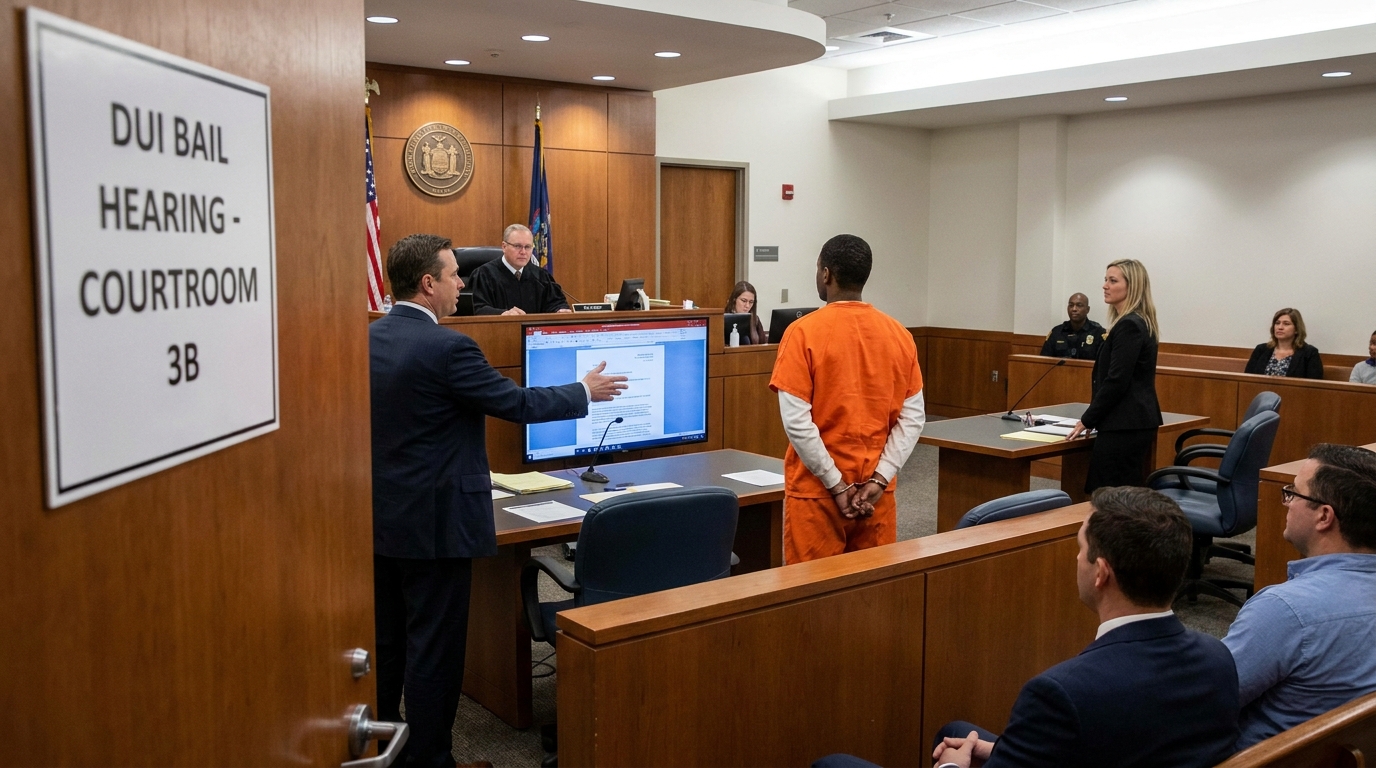
This hearing is often where bail is set. The judge may release the defendant on their own recognizance, impose nonfinancial conditions, impose monetary bail, or, in a qualifying case, order detention. Conditions can include reporting requirements, restrictions on alcohol or drugs, travel limitations, supervision, or other conditions reasonably related to appearance or safety. ARS § 13-3967 specifically authorizes several types of release restrictions.
The defendant must take every future court appearance seriously. Missing a scheduled court date can result in a warrant and can damage a later request for favorable release conditions. A failure-to-appear record is one of the factors Arizona law specifically tells judges to consider.
An arraignment comes later in the criminal case. In a felony dui case, the Maricopa County court process uses the arraignment to address the formal charge and representation. It should not be confused with the initial appearance, where release conditions and bond are commonly addressed.
A lawyer can also seek review of release conditions after the initial bail decision. This may be important if the defendant remains in custody because of an amount the person cannot pay, especially because Rule 7.3 states that courts should not create unnecessary pretrial incarceration solely because a defendant cannot afford an imposed monetary condition.
DUI Defense Strategies That Can Affect the Criminal Case and Release Conditions
A bail hearing does not decide whether the defendant is guilty. The DUI case still has to be proven. A criminal defense attorney can begin reviewing the evidence while also addressing release from custody. In some cases, weaknesses in the government’s allegations can affect both the defense strategy and arguments concerning release.
Challenging the traffic stop: Police generally need a lawful basis for a traffic stop. If an officer lacked reasonable suspicion or another valid legal basis, the defense may move to suppress evidence gathered after the stop. This can affect field observations, statements, and chemical test evidence.
Challenging actual physical control: Arizona DUI law applies not only to driving but also to being in actual physical control of a vehicle. A person found in or near a parked vehicle may have a factual argument that the person was not driving and did not present the type of control contemplated by the statute. ARS § 28-1381 and 28-1382 both use the driving or actual physical control standard.
Reviewing blood or breath testing: A BAC result is evidence, but the defense can examine collection procedures, timing, equipment records, blood handling, lab procedures, and whether the state can establish the required connection between the test result and the alleged driving.
Disputing the felony element: In an aggravated DUI case, the prosecution must prove more than an ordinary DUI. Depending on the charge, it may need to establish a qualifying license suspension or revocation, prior DUI history within the applicable 84-month period, an ignition interlock requirement, wrong-way driving, or the presence of a passenger under 15. A weakness in that aggravating element may be very important because it can affect whether the case remains a felony and how a DUI attorney approaches the defense.
Reviewing prior DUI allegations is essential for any DUI attorney to build a strong defense. When felony aggravated DUI is based on a third qualifying offense within 84 months, the prior history should be checked carefully. The statute includes rules concerning the relevant dates and periods excluded from the 84-month calculation. A prosecutor cannot simply call a charge a third DUI without meeting the statutory requirements.
Challenging other evidence tied to dangerousness: If the prosecutor asks for a high bond based on claims about dangerous conduct, the defense lawyer can examine whether the evidence actually supports those claims. Police allegations at booking are not the same thing as a DUI conviction.
Arja Shah’s work can begin with both parts of the problem: helping the client seek workable pretrial release conditions and building the DUI defense itself. Early review may be especially important when a defendant faces felony DUI charges and remains in custody on a substantial bail amount.
FAQs About DUI Bail in Maricopa County
How much is bail for a misdemeanor DUI in Arizona?
No current statewide or Maricopa County rule sets a single dollar amount for every misdemeanor DUI. Standard DUI, extreme DUI, and a BAC of 0.20 or more under ARS § 28-1382 are generally class 1 misdemeanors, but bail must be individualized. A defendant may receive an OR release with no monetary bail, or the court may impose a monetary condition based on the defendant’s circumstances.
How much is bail for felony aggravated DUI in Maricopa County?
There is no mandatory amount. Official Maricopa County Superior Court records from 2026 show class 4 aggravated DUI defendants listed as released as well as bonds of $5,000 and $200,000 in individual cases. Those figures are examples, not a standard range that every judge must follow.
Is a $200,000 bond normal for aggravated DUI?
It should not be described as a normal aggravated DUI bond. It is a documented 2026 Maricopa County example. Other official records show substantially different outcomes, including $5,000 bail bonds and release on their own recognizance. Arizona law requires the court to make an individualized decision that depend on all of the factors of the case.
Can I be released without paying bail after a DUI arrest?
Yes. Arizona law permits release on a defendant’s own recognizance in appropriate cases. A judge may determine that nonmonetary release conditions are enough to assure court appearances and address public safety concerns.
Is extreme DUI automatically a felony?
No. ARS § 28-1382 classifies a conviction under that section as a class 1 misdemeanor. A DUI may become aggravated when one of the circumstances in ARS § 28-1383 applies, such as certain qualifying license suspensions, a third DUI within 84 months, an ignition interlock violation, wrong-way driving, or DUI with a child passenger.
Can aggravated DUI result in being held without bail?
Potentially, but aggravated DUI is not automatically nonbailable. Arizona’s Constitution permits detention in certain felony cases when the required findings about the strength of the proof, substantial danger, and the inability of release conditions to reasonably assure safety are established.
Can a DUI lawyer ask the judge to lower bail?
Yes. ARS § 13-3967 allows the court to change release conditions and specifically permits increasing or reducing the bail amount. A DUI defense attorney can present information supporting a lower amount or different conditions.
Important Things to Remember
- Arizona does not have one automatic bail amount for every DUI charge.
- Standard DUI and extreme DUI are generally class 1 misdemeanor offenses under ARS §§ 28-1381 and 28-1382.
- Many aggravated DUI offenses under ARS § 28-1383 are class 4 felonies, while aggravated DUI based on a passenger under 15 is a class 6 felony.
- A misdemeanor DUI defendant may be released on their own recognizance and pay no monetary bail.
- Current Arizona Rule 7.3 says courts may not rely on a charge-based bond schedule when setting monetary release conditions.
- Published 2026 Maricopa County records show how widely felony aggravated DUI outcomes can differ, including released defendants and documented bonds of $5,000 and $200,000.
- A prior criminal history or history of failure to appear can make release more difficult.
- Employment, family ties, Arizona residence, financial circumstances, and a good record of appearing in court may support more favorable release conditions.
- Bail is a pretrial release condition, not a fine and not punishment for a DUI conviction.
- A defendant can request review of release conditions, including a request to reduce bail.
- Missing court after being released can result in a warrant and create serious problems with future release.
- The strength of the DUI defense still matters because an arrest and DUI charge do not establish guilt.
How Shah Law Firm Can Help

A DUI arrest can create two immediate legal problems at once. You may be dealing with custody and bail while also facing a criminal prosecution that can affect your driver’s license, employment, criminal record, and freedom. Shah Law Firm represents clients facing misdemeanor DUI, extreme DUI, super extreme DUI, and felony aggravated DUI charges throughout Phoenix, Scottsdale, Tempe, Mesa, Chandler, Glendale, and other communities in Maricopa County.
Attorney Arja Shah has almost 20 years of legal practice and more than 3,500 successful case victories.
Her criminal defense experience allows her to address the immediate release issue while also reviewing the evidence behind the DUI charge. Depending on the case, that may include challenging the traffic stop, actual physical control, BAC evidence, chemical testing, prior DUI allegations, license status, and the facts supporting an aggravated DUI charge.
When a client remains in jail, the defense may need to act quickly. Arja can evaluate the release order, identify information that supports a reduction in bail or different release conditions, and advocate for the client before the court. Her experience working with Arizona prosecutors and law enforcement can also help her assess how the prosecution is likely to approach a DUI case and the potential for jail time. If the case cannot be resolved on acceptable terms, her trial experience provides an added layer of protection.
Shah Law Firm provides free one-on-one lawyer consultations for people facing Arizona criminal charges. To discuss a DUI arrest, bail hearing, felony aggravated DUI, or other criminal defense matter, call (602) 560-7408. You can also use the firm’s confidential contact form to request a consultation.

