





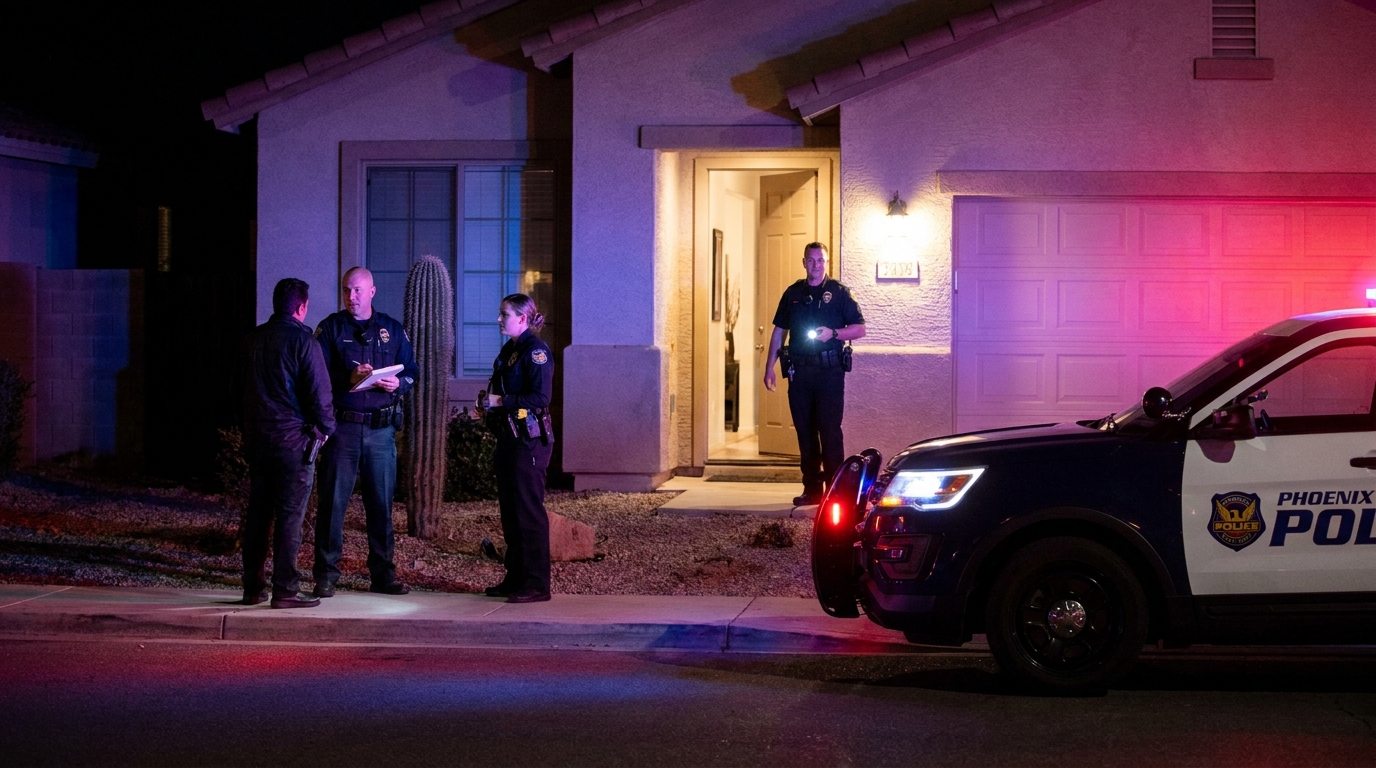
Must Arizona Police Make an Arrest on a Domestic Violence Call?
An Arizona domestic violence arrest is not required after every call. Police must make an arrest in certain situations, but they have discretion in others. The decision usually turns on probable cause, the alleged offense, reported injuries, and any weapon involved. It does not depend only on whether the person who called wants an arrest.
At Shah Law Firm, PLLC, we understand how quickly a family dispute can become a criminal case. As of 2026, attorney Arja Shah has defended more than 3,500 clients facing serious charges. Our firm provides individual attention because each person, relationship, and police report is different. We also help clients understand the legal process before making important decisions.
Quick Answers
Arizona is not a mandatory arrest state for every domestic call. Under current Arizona law, an officer must arrest when probable cause supports certain serious circumstances, including a felony, physical injury, or specified weapon conduct.
- A loud disturbance alone does not require an arrest.
- Police may rely on statements, injuries, recordings, messages, and damaged property.
- The alleged victim does not control whether prosecutors file or dismiss charges.
- A release order may prohibit contact or require someone to leave the home.
- Preserve evidence and follow every court order.
Table of Contents
- When Must Arizona Police Make a Domestic Violence Arrest?
- What Is Considered Domestic Violence in Arizona?
- What Evidence Is Needed for an Arrest?
- What Happens After a Domestic Violence Arrest?
- What Penalties and Defense Strategies May Apply?
- Frequently Asked Questions About Arizona Domestic Violence Arrests
- How Shah Law Firm, PLLC Can Help with an Arizona Domestic Violence Arrest
When Must Arizona Police Make a Domestic Violence Arrest?
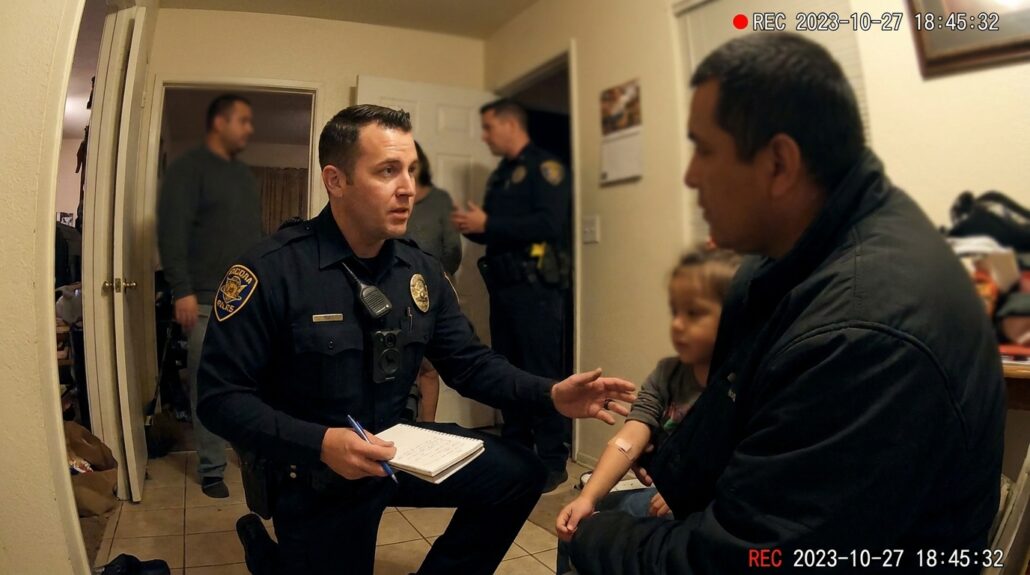
Police must make an arrest when the conditions in the Arizona domestic violence statute require it. A.R.S. § 13-3601(B) says a peace officer shall arrest when probable cause supports a qualifying felony, physical injury, or specified conduct involving a deadly weapon or dangerous instrument. The official text of A.R.S. § 13-3601 states the complete rule.
Probable cause means facts that would lead a reasonable officer to believe a crime occurred. It requires more than a guess, but it is lower than the burden of proof needed for a conviction. If those required conditions are absent, the statute generally says an officer may make an arrest when probable cause supports an act of domestic violence committed within the statutory period.
In practical terms, law enforcement officers often make an arrest after seeing an injury or hearing conflicting accounts. Domestic violence reports may also describe criminal damage, assault, harassment, threats, or disorderly conduct. Whether the underlying charge is a felony matters because an officer’s duty can change when the offense is a felony.
A person researching counsel may compare a solo lawyer with a larger law group. The firm’s Nolo.com profile provides background about its Arizona criminal defense practice. Any lawyer selected should be licensed to practice law in the relevant jurisdiction.
What Is Considered Domestic Violence in Arizona?

Domestic violence is a legal designation added to certain criminal acts when a qualifying relationship exists. It is generally not a standalone crime in Arizona.
The prosecution must address both the underlying criminal allegation and the relationship between the parties.
The Arizona domestic violence statute covers relationships such as spouses, former spouses, certain relatives, people who share a child, and some people in a romantic or sexual relationship. The analysis may depend on the alleged offense and the relationship. It can also depend on whether the alleged victim and defendant lived together.
Common underlying allegations include assault under A.R.S. § 13-1203, criminal damage, threatening conduct, and disorderly conduct under A.R.S. § 13-2904. Conduct called “domestic violence” may therefore be a misdemeanor or a felony. The classification depends on the underlying charge, the facts, and sometimes the person’s criminal history.
Arizona’s domestic violence law also addresses aggravated domestic violence. Under A.R.S. § 13-3601.02, qualifying repeat conduct may become a class 5 felony. Prior cases should be examined carefully because the prosecution must prove the required convictions and timing.
Arja Shah’s Justia.com profile reflects the 10.0 rating identified in the firm’s professional biography. That background is relevant when evaluating counsel for domestic violence charges in Arizona.
For additional background, see our broader guide to domestic violence in Arizona
What Evidence Is Needed for an Arrest?

Police need probable cause, not trial proof, to make an arrest.
An officer may consider the full scene rather than relying on one statement. Evidence commonly reviewed includes:
- Statements from both parties, children, neighbors, or other witnesses
- Visible injury, medical information, photographs, or body camera video
- Text messages, voicemail, social media posts, and recorded calls
- Broken doors, damaged phones, weapons, or other physical evidence
- Prior protective order information or statements about earlier events
Police may assess whether an injury appears defensive and whether one person acted in self-defense. They may also consider credibility, timing, intoxication, and inconsistent accounts. A lack of visible injury does not by itself prevent an assault allegation because Arizona assault law covers more than physical injury.
Officers do not decide guilt at the scene. A prosecutor later reviews the evidence and decides whether criminal charges should continue. The defendant then has due process rights, including the right to counsel and the right to challenge the state’s proof.
From our experience, early evidence preservation can be important. Our attorneys may seek dispatch audio, video, witness information, and messages through investigation or discovery. Arja Shah’s Avvo Clients’ Choice Award reflects the client-focused communication described in the firm’s biography.
What Happens After a Domestic Violence Arrest?

The person typically enters a court process involving booking, release conditions, and a first court appearance. The judge may impose a no-contact order, require distance from a residence, or set other conditions.
A defendant must follow that court order even if the other person requests contact.
A criminal no-contact order is different from a civil protective order. Under A.R.S. § 13-3602, a petitioner may request an order of protection against a respondent. The Arizona Judicial Branch protective order information explains the civil process and available court forms.
The next steps may include an arraignment, plea discussions, discovery, witness interviews, motions, or trial. At an arraignment, the defendant hears the charge and enters a plea. A defense attorney might file a motion to suppress evidence if police obtained it in violation of constitutional protections.
The alleged victim cannot personally drop the charges because the state controls the criminal case.
A prosecutor may consider that person’s wishes, but those wishes are not binding. The case could continue without willing testimony when other admissible evidence exists.
Our approach is to review the accusation, release terms, police conduct, and available evidence as separate issues. We work with clients to reduce confusion and prepare for each court appearance. The firm’s Lawful.com listing identifies its Phoenix criminal defense practice and service area.
Steps to Protect Your Rights
After an arrest, focus on complying with court orders and preserving evidence. Avoid conduct that could aggravate the situation.
- Do not violate a no-contact order, even with permission from the other person.
- Save messages, call logs, photographs, receipts, and location records.
- Do not post about the accusation online.
- Write down potential witness names while events remain fresh.
- Speak with a criminal defense attorney as soon as practical.
What Penalties and Defense Strategies May Apply?

Potential penalties depend on the underlying offense, prior record, and facts proved in court. Arizona treats domestic violence offenses through the classification of the underlying charge, along with any domestic violence designation. Charges may range from a misdemeanor to felony domestic violence.
For example, a Class 1 misdemeanor can carry up to six months in jail under A.R.S. § 13-707. The maximum fine for an individual is generally $2,500 under A.R.S. § 13-802, plus possible surcharges. A court may also order probation, counseling, or other conditions. These limits are subject to change and should be confirmed for the specific charge.
| Charge or issue | Potential penalty, jail time and fines | Key point |
|---|---|---|
| Class 1 misdemeanor | Up to six months in jail and a potential fine, plus applicable surcharges | The sentence depends on the offense and case facts. |
| Felony underlying charge | Potential prison, probation, fines, and other conditions | Aggravated assault is one possible felony allegation. |
| Aggravated domestic violence | Class 5 felony exposure when statutory requirements are met | Prior convictions and timing require close review. |
| Protective or release order violation | Possible additional criminal allegations and stricter release terms | Follow the written order until a court changes it. |
A domestic violence conviction may also affect employment, housing, family matters, and firearm rights. Federal law can restrict firearm possession after a qualifying misdemeanor domestic violence conviction under 18 U.S.C. § 922(g)(9). Whether a person is convicted of domestic violence under that federal definition depends on the statute and record.
Possible defense strategies include self-defense, mistaken identity, false accusation, lack of intent, unreliable testimony, or insufficient proof. Counsel may also challenge whether the qualifying relationship existed. Miranda v. Arizona is an important precedent involving custodial questioning, but a Miranda issue does not automatically end a case.
Arja Shah has been recognized by The National Top 100 Trial Lawyers. Our experience includes litigated cases in Maricopa County and representation involving serious charges in Arizona. Outcomes depend on the evidence and procedural history of each case.
Frequently Asked Questions About Arizona Domestic Violence Arrests
1. What evidence is needed to arrest someone for domestic violence in Arizona?
Police need probable cause that a qualifying crime in Arizona occurred. They may rely on statements, injuries, video, messages, damaged property, witness accounts, or other evidence. The required proof is lower than the proof needed to find someone guilty of domestic violence at trial.
2. Can domestic violence charges be dropped in Arizona?
The alleged victim cannot require the state to drop the charges. The prosecutor controls that decision and may continue the case based on other evidence. An attorney can address weaknesses through negotiation, a motion, or trial preparation.
3. What are the consequences of a first-time domestic violence charge?
A first allegation could lead to jail, probation, counseling, fines, release restrictions, or collateral effects if there is a conviction. The result depends on the underlying charge and the person’s record. A first case is not necessarily aggravated domestic violence.
4. Can a domestic violence case affect firearm rights?
Yes, a qualifying conviction or protective order may affect firearm possession under federal law. The analysis is fact-specific and can be subject to interpretation. Consult an attorney before possessing or transferring a firearm.
5. What should I do if I am falsely accused?
Preserve favorable evidence and avoid direct contact if any order limits communication. Do not attempt to pressure a witness or explain the case through social media. An experienced criminal defense attorney can help you understand lawful ways to gather evidence and protect your rights.
6. How do I look up domestic violence arrests in Arizona?
Public information may be available through the arresting agency or the relevant Arizona courts. Access varies by agency, record type, and case status. An arrest record does not establish that the defendant committed the alleged offense.
This article is for informational purposes only and is not legal advice. Reading it does not create an attorney-client relationship; consult an attorney about your specific situation.
How Shah Law Firm, PLLC Can Help with an Arizona Domestic Violence Arrest
 If you are facing a domestic violence charge after a call in Phoenix, Scottsdale, Mesa, Tempe, or elsewhere in the state of Arizona, Shah Law Firm, PLLC can review what officers reported, the probable cause basis, release orders, and possible defenses. In the first conversation, our team will help you understand the accusation and identify practical next steps.
Attorney Arja Shah has defended more than 3,500 clients as of 2026. To discuss an arrest or pending criminal case, call (602) 560-7408 or contact us online. Ask whether the initial meeting is a free consultation and what information you should provide.


