





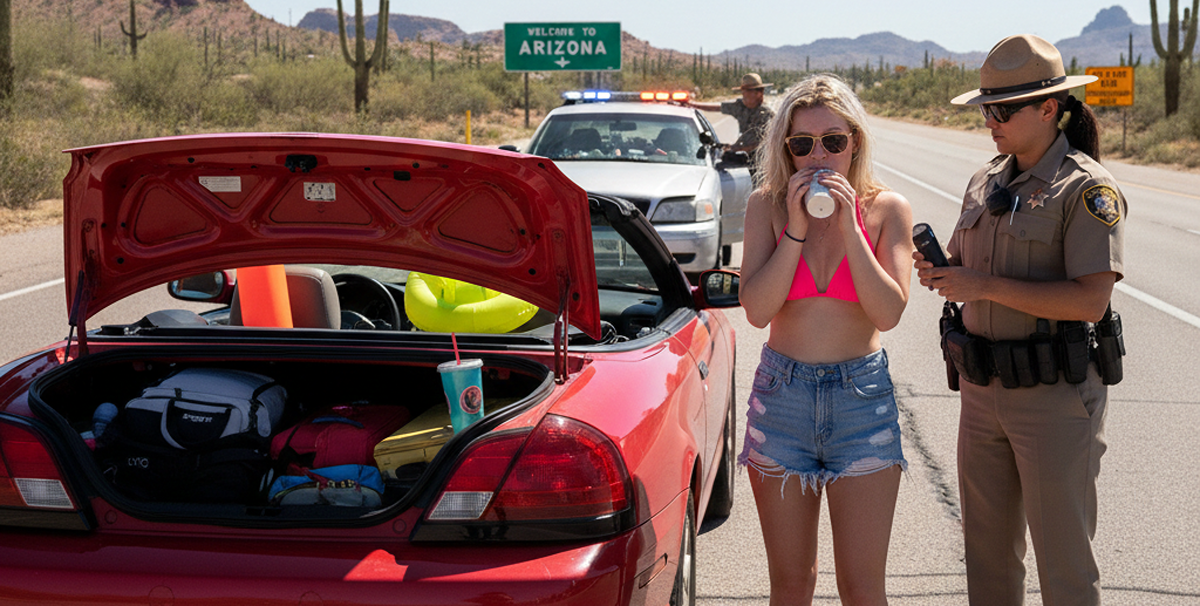
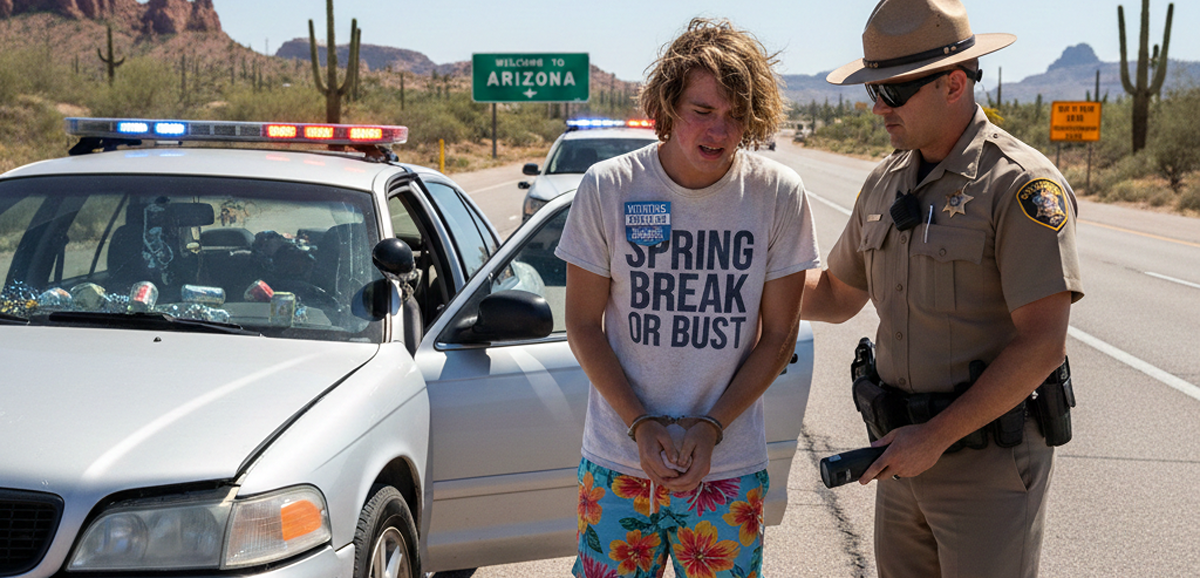
Spring break in Arizona brings large crowds to places like Scottsdale, Tempe, and Phoenix. With packed bars, pool parties, and major events, law enforcement increases patrols and sets up DUI enforcement operations across Maricopa County. What may begin as a routine traffic stop can quickly turn into a DUI or drug arrest with life-changing consequences.
Many people do not realize how fast a simple stop for speeding or a broken taillight can escalate. Officers are trained to look for signs of impairment, the odor of marijuana, open containers, or anything that gives them probable cause to investigate further. Once that investigation begins, you may face DUI charges under Arizona law, drug possession allegations, or both.
This article explains how spring break traffic stops often lead to DUI and drug arrests in Arizona, what laws apply, the penalties you may be facing, and how attorney Arja Shah of Shah Law Firm can step in immediately to protect your rights. If you have already been arrested for a spring break dui, the decisions you make now matter.
Table of Contents
- Why Spring Break Leads to Increased DUI and Drug Arrests in Arizona
- How a Traffic Stop Turns Into a DUI Investigation
- Arizona DUI Laws Under ARS 28-1381 and Related Statutes
- Drug Arrests During Spring Break Traffic Stops
- What Are the Penalties for DUI and Drug Charges in Arizona?
- Defense Strategies for Spring Break DUI and Drug Cases
- Real World Examples of Spring Break Arrests in Arizona
- FAQs About Spring Break DUI and Drug Arrests
- Important Things to Remember
- How Shah Law Firm Can Help
Why Spring Break Leads to Increased DUI and Drug Arrests in Arizona
Every year, Arizona becomes a spring break destination. Scottsdale, in particular, sees a surge in out-of-state visitors. Tempe, home to Arizona State University, also experiences heavy nightlife traffic. With that increase comes targeted enforcement.
Police departments across the Phoenix metropolitan area coordinate DUI task forces. These operations focus on identifying impaired drivers and stopping suspected criminal activity. Officers are often assigned overtime shifts specifically to look for drunk or drugged driving.
Law enforcement officers pay attention to common indicators such as:
- Vehicles weaving within a lane
- Speeding or driving too slowly
- Failing to signal
- Expired registration or minor equipment violations
Even a minor infraction gives police the legal basis to conduct a stop. Once contact is made, officers begin assessing whether there are signs of alcohol or drug impairment.
For many people, especially visitors unfamiliar with Arizona’s strict DUI laws, this comes as a shock. Arizona is known for having some of the toughest DUI penalties in the country.
How a Traffic Stop Turns Into a DUI Investigation
Most DUI cases begin with a lawful traffic stop.
Under the Fourth Amendment, police must have reasonable suspicion to pull you over. This can be as simple as a broken brake light or improper lane usage.
Once the officer approaches your vehicle, they observe your behavior. They may look for:
- Bloodshot or watery eyes
- Slurred speech
- The smell of alcohol or marijuana
- Open containers
- Nervous or inconsistent responses
If the officer suspects impairment, they may ask you to step out of the vehicle and perform field sobriety tests. These tests are designed to evaluate balance, coordination, and divided attention skills.
In Arizona, officers may also request a preliminary breath test. If they develop probable cause, you may be arrested and asked to submit to a breath or blood test under Arizona’s implied consent law, found in ARS 28-1321.
Refusing a chemical test can result in an automatic driver’s license suspension, even before your criminal case is resolved.
A traffic stop that began as a minor violation can quickly escalate to an arrest for DUI under ARS 28-1381, or even to an aggravated DUI under ARS 28-1383 if certain factors apply.
Arizona DUI Laws Under ARS 28-1381 and Related Statutes
Arizona’s primary DUI statute is ARS 28-1381.
Under this law, it is illegal to:
- Drive while impaired to the slightest degree by alcohol or drugs
- Drive with a blood alcohol concentration of 0.08 percent or more within two hours of driving
- Drive with any drug defined under ARS 13-3401 or its metabolite in your body
The “impaired to the slightest degree” standard is important. Prosecutors do not need to prove you were falling-down drunk. Even minimal impairment can lead to conviction.
Arizona also has stricter categories:
- Extreme DUI, BAC of 0.15 percent or higher
- Super Extreme DUI, BAC of 0.20 percent or higher
Aggravated DUI under ARS 28-1383 may apply if you were driving on a suspended license, had two prior DUI convictions within seven years, or had a child under 15 in the vehicle. An aggravated DUI is a felony.
These laws apply equally during spring break. Out-of-state drivers are not given special treatment.
Drug Arrests During Spring Break Traffic Stops
Spring break arrests are not limited to alcohol. Officers frequently encounter marijuana, prescription medications, cocaine, MDMA, and other substances during vehicle stops.
Arizona’s drug possession laws are found in ARS 13-3407, ARS 13-3408, and related statutes.
Possession of dangerous drugs, narcotic drugs, or drug paraphernalia can result in felony charges.
Even though marijuana laws have changed in Arizona, there are still limits.
Driving while impaired by marijuana remains illegal under ARS 28-1381.
Possessing more than the legal limit or transporting marijuana improperly can also lead to charges.
A common scenario involves an officer claiming to smell marijuana during a stop. That odor may provide probable cause to search the vehicle. If drugs are found, the driver and even passengers may be arrested.
Drug charges can carry serious consequences, including prison exposure for repeat offenders. When combined with DUI allegations, the case becomes even more complex.
What Are the Penalties for DUI and Drug Charges in Arizona?
Arizona imposes mandatory minimum penalties for DUI convictions. Even a first offense carries jail time.
A first offense DUI under ARS 28-1381 typically includes:
- Minimum 10 days in jail, with 9 days possibly suspended upon completion of alcohol screening
- Fines and assessments exceeding $1,500
- Driver’s license suspension
- Ignition interlock device requirement
Extreme and Super Extreme DUI convictions carry longer mandatory jail sentences.
Drug possession penalties depend on the type and amount of the substance, as well as prior convictions. Some first-time offenders may qualify for diversion, but felony exposure remains a possibility.
Below is a general overview of penalties:
| Offense | Classification | Potential Penalties and Statute References |
| First Offense DUI | Class 1 Misdemeanor | Minimum 10 days jail, fines over $1,500, license suspension (ARS 28-1381) |
| Extreme DUI | Class 1 Misdemeanor | Minimum 30 days jail, higher fines, interlock required (ARS 28-1382) |
| Aggravated DUI | Class 4 Felony | Minimum 4 months prison, felony record (ARS 28-1383) |
| Drug Possession | Often Class 4 Felony | Probation or prison depending on priors (ARS 13-3407, 13-3408) |
These penalties increase with prior convictions. A felony conviction can affect employment, housing, and professional licensing.
Defense Strategies for Spring Break DUI and Drug Cases
Every DUI or drug case must be carefully reviewed. Arja Shah examines each step of the stop and investigation.
Common defense strategies include:
Unlawful Traffic Stop
If police lacked reasonable suspicion to pull you over, evidence may be suppressed.
Improper Field Sobriety Testing
Field tests are subjective. Fatigue, medical issues, and anxiety can affect performance.
Breath or Blood Testing Errors
Improper calibration, contamination, or chain-of-custody issues can undermine results.
Violation of Miranda Rights
Statements obtained without proper advisement may be excluded.
Unlawful Search and Seizure
If officers searched your vehicle without probable cause or a valid exception, drug evidence may be thrown out.
With nearly 20 years of experience and over 3,000 successful case victories, Arja Shah understands how prosecutors build DUI and drug cases in Maricopa County. She works to reduce charges, negotiate favorable outcomes, or take cases to trial when necessary.
Real World Examples of Spring Break Arrests in Arizona
Example One, Scottsdale DUI Arrest
A college student visiting from out of state is stopped for speeding after leaving a pool party. The officer smells alcohol and conducts field sobriety tests. The student is arrested for DUI. With proper legal representation, issues with the stop-and-test procedures may be challenged.
Example Two: Tempe Traffic Stop and Drug Charge
A driver is pulled over for a broken taillight near ASU. The officer claims to smell marijuana and searches the car. A small amount of cocaine is found in a backpack. The driver now faces felony drug possession charges in addition to possible DUI allegations.
These situations show how quickly a minor stop can turn into serious criminal charges.
FAQs About Spring Break DUI and Drug Arrests
- Can I refuse a breath or blood test in Arizona?
You can refuse, but under ARS 28-1321 your license may be suspended for at least 12 months. - Is marijuana DUI treated the same as alcohol DUI?
Yes. Driving while impaired by marijuana is illegal under ARS 28-1381. - What happens if I am from out of state?
Arizona will still prosecute the case. Your home state may also take action against your license. - Can a DUI be reduced or dismissed?
Yes, depending on the facts. Weak evidence, testing errors, or constitutional violations may support dismissal or reduction. - Do I really need a DUI lawyer?
Yes. Arizona DUI laws are strict, and mandatory penalties apply. Early legal intervention can make a significant difference.
Important Things to Remember
- Spring break leads to increased DUI and drug enforcement in Arizona.
- A minor traffic violation can lead to serious charges.
- Arizona has strict DUI laws with mandatory jail time.
- Drug possession during a traffic stop often results in felony charges.
- Challenging the stop, testing, and search procedures is critical.
How Shah Law Firm Can Help
 If you were arrested during spring break in Phoenix, Scottsdale, Tempe, Mesa, or the surrounding areas, you need immediate legal guidance. The sooner you act, the more options may be available to you.
Attorney Arja Shah has devoted her career to defending people facing DUI and criminal charges. With almost 20 years of experience and more than 3,000 successful case victories, she knows how to fight back against aggressive prosecution tactics. She has built strong working relationships with Arizona prosecutors and understands how to negotiate effectively while preparing every case as if it may go to trial.
Shah Law Firm offers free one-on-one consultations. You will speak directly with Arja Shah about your situation. She will explain your rights, review the evidence, and create a defense strategy focused on protecting your freedom and future.
Call Shah Law Firm today at (602) 560-7408 or visit https://arjashahlaw.com to schedule your free consultation. A spring break arrest does not have to define your future, but you must take action now.

